Interview: 'Luck' producers David Milch and Michael Mann

How did the two dramatic heavyweights work together on horseracing series?

Interview: 'Luck' producers David Milch and Michael Mann

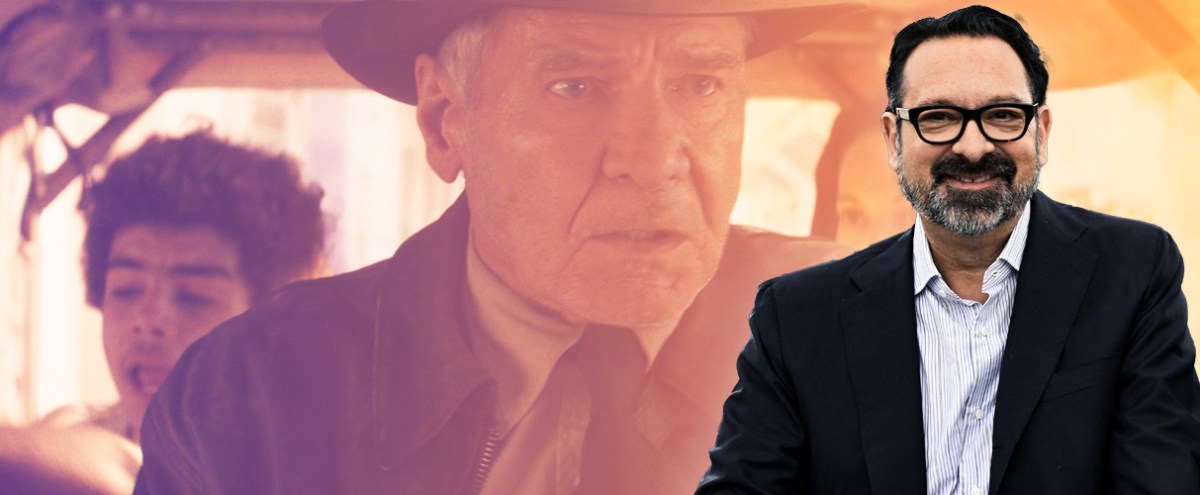
"Luck" producers David Milch and Michael Mann.

Credit: HBO

Are you a fan of Luck?

Sign up to get the latest updates instantly.
When I heard a couple of years ago that David Milch, Michael Mann and Dustin Hoffman had teamed up to write, direct and star in an HBO drama about the world of horseracing — the finished product, "Luck," debuts Sunday night at 9 — my initial reaction was that I was almost as eager to see a fly-on-the-wall documentary about the making of such a show as I was to see the show itself.
 
In one corner, you had Milch, the genius creator of "Deadwood" and "NYPD Blue," who had over the years developed a process that involved constantly rewriting scripts, to the point where he would often dictate brand-new dialogue to actors right as the cameras were about to roll. In another, you had Hoffman, the two-time Oscar winner legendary for how much time and energy he devoted to preparing for a part. And in yet another corner, you had Mann, a brilliant and strong-willed director (and writer in his own right) who's been the clear person in charge of previous shows like "Miami Vice" and "Crime Story." When you add in a colorful personality like Nick Nolte, what exactly was that working experience going to be like?
 
Though at least one report about the production claimed Mann had banned Milch from the set, Mann vehemently denied it when they appeared with Hoffman and Nolte at the Television Critics Association press tour earlier this month.
 
"It’s ridiculous," Mann said. "There’s a time when David, (HBO president) Michael Lombardo and I embarked on this, you know, had a meeting, understood how we were going to make the pilot. And then went off and did it, meaning I was going to make it like any other film I make. There’s times when a director is on the set that he wants to just have the set for himself and the actors to work out a scene. And one of those times, he’ll ask the first AD and the producer and the camera man and the dolly grip and everybody else to excuse him for 10 or 15 minutes. And somehow that got contorted into something else."
 
Meanwhile, Milch went out of his way to be complimentary of Mann, often injecting praise towards his colleague in answers to wholly unrelated questions.
 
Whatever actually happened on the set, Milch and Mann have combined to make a terrific show (you can read my review here), and that's ultimately all that matters. And when I spoke to both men later that day, they continued the mutual admiration society even as they talked about the delicate working arrangement they needed to set up to make "Luck."
 
The first day I met Milch, he took me and the late David Mills to the track, which was the first and only time I've seen horses race in person. It's been a lifelong passion of his (and I didn't know before this interview how literally lifelong it's been), so with Mann running a few minutes behind for the interview, I began by reminding Milch of that afternoon.
 
(Note: at one point, Milch discusses an event that happens late in the series pilot episode, which HBO already aired as a sneak preview back in December.) 
 
So that day you took me and Mills out was the first time I'd ever been. When did you first go to the track?
 
David Milch: I was five or six years old and my dad took me, and it was a complicated and conflicting experience. He explained to me that he knew that in my heart of hearts, I was a degenerate gambler and-
 
At five or six?
 
David Milch: At five or six, but that despite my disposition to be a degenerate it wasn’t legal for me.
 
(Mann enters)
 
David Milch: And I've afflicted Michael with this story before, so I will abbreviate it, but all of the process of disentangling all of the conflicting messages that were contained in that has preoccupied me either obsessively or more constructively, creatively in the ensuing years. 
 
Now Michael, David has a lifetime of experience at the track. What was your exposure to it before this?
 
Michael Mann:         Nothing. I mean, I went to one race. I think I went to the Kentucky Derby once and kind of shocked that we came all this way and the whole thing only took a little over a minute. But I ride now and I own a horse who is out to pasture, so I know horses have personalities, but that is what’s exciting. That is what is usually exciting about something for me is if I start—you know for something, kind of a frontier. I don’t know anything about it and then you can’t have a better guide to the world of the racetrack than David.
 
So when you said, "All right, I'm going to do a show at the track," what was the story or the idea that you wanted to tell with it?
 
David Milch: I had no sense of any particular story. I had a collection of characters that compelled my imagination, but in my experience that’s all that you ever have. And the process of witnessing the unfolding mystery is the process of telling the story in the same way I watched Michael engage those materials like an athlete. It’s kind of sometimes you’re wrestling with them, (and) sometimes you’re seducing them. For me, I'm never going to understand horse racing and I couldn’t begin to tell a linear story about it. It’s just a collection of experiences I'm trying to report.
 
Michael, you've done some impressive things in the past with the way you've shot cars and guns and other machines, and here you're working with live animals. And the way you shot the races, especially in the pilot, I have never seen that method quite used before. Talk a little bit about the challenges of that.
 
Michael Mann:         I'm going to dispute with the last statement. From my point of view I'm interested in character and people and conflicts and themes and politics and-
 
I know, those as well.
 
Michael Mann:         And if you look at my movies like "The Insider" and "Last of the Mohicans," they don’t have a lot to do with cars or machines or guns. I like books. So I'm not interested in the objects is the answer. I'm interested in the internal drama. I'm interested in what’s going on. I'm interested in why Escalante (the horse trainer played by John Ortiz) has this — he is very adept. He is very smart. He is totally disreputable and clearly he’s autodidactic. He has educated himself with some results, like he knows for sure they didn’t really land on the moon and they can’t fool him. So those tend to be interesting in that kind of a drama. 
 
I like the elegance of athleticism and speed. It's very romantic about that and I think that there is brilliance that is not all about the neocortex, so I think that Michael Jordan is a brilliant artist. There is not much difference between him imagining how he can extend himself and a theoretical physicist in terms of a mental process. So I like that, and how do I impact upon an audience that inner experience of being a jockey on a horse moving like that and what it is? First of all, I have to know what the jockey’s experience is, what the horse’s experience is, what the relationship between the two of them is. It’s an imagined experience and how I can impact upon that so that you as an audience feel I got some fraction of it?
 
David Milch: If I could interject, the process of the sequence in which the horse dies in the first episode compresses into two minutes a dramatic meditation on the intersection of science and spirit and it compels the imagination at five or six different levels. I think that one of the things that engage me as I watched Michael work on the piece was exactly his examination of the kind of romantic underpinning of what seems to be a mechanistic process.
 
In both the writing and the directing, did you have to treat the three main horses as characters? 
 
Michael Mann:         They were written as characters. It’s sequential. David writes them as characters, I have to find three horses who can do the right things for us and are also visually separated a little bit, so that you can track with them somewhat. Each horse’s character isn’t built. They look different and they’re related to differently by different people. It’s our human characters who you know. What we tried to do in the beginning of the pilot is make you almost subliminally aware — aware without knowing you’re being aware — that there is a life and a liveliness within the animals themselves, so it’s almost like they’ve got their own world, that the people aren’t as tuned to the fact that the animals have their world as we the audience are, and that by design because I wanted you in that place for the eight race with the horse. 
 
David, in the past you would rewrite often right up until when the cameras were rolling. Given the way you ultimately settled on the division of labor, did you have the ability to do that here?
 
David Milch: It didn’t happen.
 
So how did that change your process?
 
David Milch: Utterly and necessarily and properly, so much of Michael’s storytelling process is subliminal, sensual, visual that you can’t fool around with that. You can’t assume that, "Well, if I just rewrite a speech, it doesn’t have an effect on the rest of it." And I had to make peace with that, and it was not an uneventful process, the process of making peace with that, but my work had to finish earlier and that becomes simply a discipline that you live into and try to derive a kind of strength from.
 
Michael Mann:         It makes complete total sense if you think about it because the writing is brilliant. It has attracted a lot of great talent who require preparation to bring their best game onto the floor, and because it’s an artistically ambitious piece then that requires a lot of choreography of components to deliver that. So all that means is that you have to have it earlier, which means that we design ways for the production for afford David more time when he needed time, which is unheard of, unheard of. It’s only through the support of HBO that we were able to do it and they actually literally stopped filming.
 
David Milch: Shut down.
 
Michael Mann:         Shut down and paid people to stay home so that there could be more time to get it. So talk about a collaborative effort of everybody, including HBO and David and I working toward a common objective.
 
Alan Sepinwall may be reached at sepinwall@hitfix.com
Trending Now on HitFix Boards
Topic Started By Latest Post Replies
Jeff G
1 day ago
4
RU Serious
4 days ago
1
RU Serious
4 days ago
5
sepinwall
14 days ago
2
Discuss Scripted Dramas on HitFix Message Boards »

Comments

  • Option 1

    Comment instantly as a guest Guest
  • Option 2

    Connect
  • Option 3

    Login or create a HitFix account Login Signup
  • Default-avatar

    Mike It sounds like there was a lot of friction, but to have such talents working together, great things are going to come from that friction. I really can't wait and watch the whole season as one piece.

    January 26, 2012 at 2:54PM EST Reply to Comment
  • Default-avatar

    alynch To put the shows unhurried production process in perspective, I read an interview with Jill Hennessy where she was promoting some indie film, but when the subject of "Luck" came up, she mentioned that she was only on set for about five days out of the month on average, and that she didn't even have to live in California while the show was being made. Granted, she's a supporting character, but such a light workload for a series regular seems still pretty unusual.

    January 26, 2012 at 3:05PM EST Reply to Comment
    • Midnight_run_mca255950_talkback_profile

      sepinwall Hennessy also has among the smallest roles of anyone in the regular cast. But yes, that's still light.

      January 26, 2012 at 3:34PM EST
  • Default-avatar

    Benjamin Kabak These two seem like egotistical bores to deal with. No chance they work together Season 2.

    January 26, 2012 at 3:47PM EST Reply to Comment
  • Default-avatar

    The Guvna Michael Mann is, by some considerable distance, my favourite filmmaker, but boy he does talk a lot of pretentious bollocks. He seems absolutely incapable---not just unwilling, but incapable---of acknowledging the aesthetic quality of his work.

    "What about that lovely overhead shot of the city lights reflecting off the hood of a black car in THIEF? The one subsequently reused to equally lovely effect in the pilot episode of 'Miami Vice'?"
    "I don't follow. I don't know what you mean. It's about character development and self-realisation, and---"
    "The hood shot?"
    "It doesn't exist. You're incorrect. You're just wrong. I never did that."
    "Except when you...*did*...do that?"
    "You're being glib. And wrong. Don't be so stupid."
    "So when you spent a decade honing a visual style that is singularly identifiable as yours, it was..."
    "An accident."

    January 26, 2012 at 4:20PM EST Reply to Comment
    • Default-avatar

      MICGUAR Are those actual quotes? If so, where are they from? Regardless, I think very few artists, whether they be painters, composers, novelists, film directors, or what have you, actually try a "hone a visual style." Most of them just try and tell and story. The style emerges from the distinctiveness of their personality unconsciously. That's my theory, at least. I'm a huge Mann fan, BTW.

      January 26, 2012 at 4:44PM EST
    • Default-avatar

      The Guvna No, I was being facetious. That's the underlying tone of his responses to any questions about the aesthetics of his work. Or, rather, it is these days. Once upon a time, he would admit that, like most mortals, he would strive to compose the most evocative images he could to tell his stories. Somewhere along the way, however, he sort of disappeared up his own ass, simply refusing to admit that those evocative images were conscious choices, and now we tend to get terse, defensive answers like the ones above. James Caan, incidentally, has also mentioned this change when discussing Mann's recent tumble into pretentiousness, and how he liked the Michael Mann he worked with in 1980, and his films, a whole lot more.

      As to your main point, I respectfully disagree. I don't know that I'd extend it to *all* artists, but with respect to filmmakers with a highly distinctive style, I am absolutely certain it stems from conscious choices. If he were some point-and-shoot indie mope, I might think otherwise, but the Mann look doesn't happen by accident. An extraordinary amount of time and energy goes into developing that aesthetic, and I don't believe for one second that he is oblivious to the consistently on the results. And that's really what gets up my hose more than anything: I'm not saying "be more aware of your own aesthetic". I am, however, saying "don't be so goddamned defensive when someone points out what is obvious to everyone else on Earth *but* you". I can see how perhaps he might feel limited by having his "style" defined so rigidly, but said limitations and said definition are largely the result of *his* choices. In most of his post-1990 interviews (he was a bit more honest about his stylistic choices circa 'Miami Vice" and MANHUNTER), he seems unwilling to even entertain the notion that aesthetics were a consideration in his staging, which is either uncharacteristic obliviousness or outright dishonesty. At some point, he seemed to acquire a "style over substance" reputation, and his (over)reaction to it was seemingly not to downplay the importance of his visuals over his narratives, but rather to simply pretend that the visual aspect of it didn't exist at all. It is, quite frankly, kind of bizarre.

      When a director maintains a consistent look over that many pictures, regardless of who is credited with designing and photographing them, it's a bit much to expect that it was a happy accident, and a function of simply "trying to tell the story". He isn't a traffic cop making Disney films in the 70s. Mann is far too intelligent and far too perceptive for those consistencies to be anything other than intentional, and his latter-day refusal to acknowledge this really doesn't do him as much credit as he probably thinks it does.

      January 26, 2012 at 5:12PM EST
    • Default-avatar

      The Guvna "...oblivious to the consistency of the results", even. Oy.

      January 26, 2012 at 5:15PM EST
    • Default-avatar

      MICGUAR I get where you're coming from, The Guvna, even if I very much disagree. I don't really have the dedication to write a response as long or as thoughtful as yours was, but I'll just say that, in short, my belief is this: The artist is typically drawn to a story and interprets that story in their own way, because it reflects and appeals to their own concerns or fears or desires, often without the artist even realizing exactly why. The consistency of visuals is just a manifestation of the fact that the artist's mind is consistent. Of course their are exceptions, but I just don't think Mann's one of them.

      Your main complaint seems to be with Mann's attitude in interviews, of which I can't begrudge you, but I understand why he feels the way he does. Plenty of creative people (though far from all) don't like others boldly making declarations about their art. It can (key word being can, and not does) feel constrictive, belittling, or reductionist.

      January 26, 2012 at 6:35PM EST
Alan Sepinwall

About This Blog

All through his childhood, Alan Sepinwall's relatives told his parents, "All that boy does is watch television! How's he going to make a living doing that?" His career as a TV critic has been 15 years and counting of his attempt to answer their concerns. "What's Alan Watching" is a blog whose title is self-explanatory: Alan watches TV shows, then writes about what he watched. He can be reached at sepinwall@hitfix.com

Get Instant Alerts on What's Alan Watching

HitFix Poll

Which multiple Grammy winner most deserved the accolades?

Latest Posts
More Posts
Recent Activity on Facebook
Most Popular on Facebook