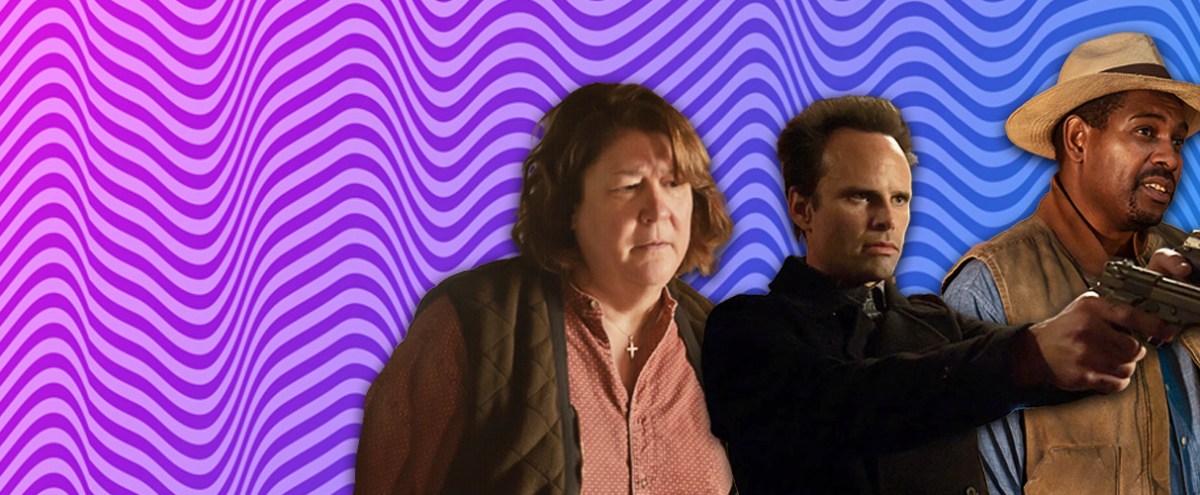
Though he'd probably still prefer you get to the end of a season before passing judgment
As you know if you've been reading me for more than five seconds, I think "The Wire" is the best drama to ever air on television. I'm also an enormous fan of the rest of David Simon's oeuvre, all the way from his book "Homicide: A Year on the Killing Streets," all the way up through "Tremé," which will be back on HBO this fall.
But I was very disheartened to read yesterday's New York Times interview with Simon, in which he seemed to suggest there was a right and a wrong way to watch his shows, and he disapproved of anyone doing it the wrong way. This passage seemed particularly contentious, to both myself and a lot of people I follow in Twitter, be they fellow TV critics or other TV showrunners who are fans of "The Wire."
"The number of people blogging television online — it’s ridiculous. They don’t know what we’re building. And by the way, that’s true for the people who say we’re great. They don’t know. It doesn’t matter whether they love it or they hate it. It doesn’t mean anything until there’s a beginning, middle and an end. If you want television to be a serious storytelling medium, you’re up against a lot of human dynamic that is arrayed against you. Not the least of which are people who arrived to “The Wire” late, planted their feet, and want to explain to everybody why it’s so cool. Glad to hear it. But you weren’t paying attention. You got led there at the end and generally speaking, you’re asserting for the wrong things."
Then Simon reached out to me this morning, acknowledging that he came across badly in the interview but also feeling that certain points weren't properly conveyed, either by himself or by the way the interview was edited. We wound up talking for nearly an hour about the idea of people coming to "The Wire" late, the pluses and minuses of weekly episode reviews, and more. It goes on a while — not surprisingly, I spent a lot of time discussing the part about the episode reviews, which is probably of less interest to the majority of you than it is to me — so I feel I should actually put the last comment from Simon up first, and then go into the full transcript. His main point was that a number of his comments came out of a discussion of Grantland's March Madness-style bracket of "Wire" characters, which he felt was too reductive of all the things he was trying to say with that series, which led to this:
Let me say this: my apologies to anyone for saying, or trying to say, "You're not cool if you didn't get to 'The Wire' early, and I only want you to watch the show on my terms." What I was saying is "The Wire" has been off the air for 4 years now. That it would be celebrated with things like who's cooler, Omar or Stringer, at this late date, and that the ideas of the show would be given short shrift, those were the target of my comments. And through a miscommunication — probably my fault, I have no way of knowing — I have apparently told everybody that I don't want the show watched except on Sunday night at 10 o'clock, which apparently is the exact opposite of things I've been saying in interviews for years. It is contradictory of everything I've said before. I'm reading it in the paper and I'm not making sense to myself. Sorry. My bad.
And now back to the beginning.
So what's your concern with the interview?
I'm not trying to disown any of it. It was really done at the end of March after all the bracketology, and that at some point came up, and I was like, "Oh, that stuff," and then we were talking about that in my head, but maybe not in his head. I read it and I said, "That is contradictory on its face. Why would I not want people to come to 'The Wire 'late when I feel it's the delivery system that saved the show?" And that applies to every show I do, because when you're building it in the early stages of it, the nature of it can't be self-evident. It needs time for people to find it.
What I was expressing disappointment at was specifically the guys doing all the bracketology on Grantland, where these guys weren't around when the show was fighting for its life, and now that it's all there on the page, and you can consider all of that and argue about that, they want to break it down like a deck of cards, and argue over whether the jack of spades is better than the jack of hearts.. "The Wire" wasn't about whether Stringer was better than Omar, or this scene better than that scene, or season 2 versus season 3. That's what we were trying not to build. I was expressing distaste for that.
And somehow, my critique of all that bracketology stuff became — either through my own neglect of making clear what pronoun I was using, or because the Times didn't want to reference where Grantland came up in the conversation — something else. I called up the guy and said, "Those were my quotes, but I wasn't talking about viewers."(*)
(*) I checked with the interviewer, Jeremy Egner, who emailed that after he spoke with Simon, "I went back through the notes, transcript and recording to make sure I hadn’t omitted something that would have made his complaint more explicit. I didn’t. He also didn’t mention Grantland by name, though it was clear that was the sort of thing he was talking about—and it’s the most recent example I know of—so I included a link to it in the interview."
Because on Twitter yesterday, a lot of people took it as you saying people are only allowed to watch "The Wire" in a certain way.
You can watch it any way you want. I know I'm not allowed to speak for how people want to watch "The Wire." But let me put it on its head and ask, am I allowed to say what I think has value in the piece for me, and for the other people who worked on the show? For us, telling us how cool Omar was four years after the entire thing is on the page — if that's the point, then our ambitions were pretty stunted to begin with. I was asked a question about what I thought about the show's longevity, and about the "Wire" mania that was going on in March when the brackets sprung up, and I answered to that. Other people's mileage may vary and will vary, but if you're asking me whether or not that stuff is meaningful, I think in some ways it diminishes "The Wire." if you go online, you'll find some people who made very smart critiques of that nonsense. I read those(**) and went, "Yeah, man, those guys get it, and the fellows wasting time breaking this thing down to its components, what a shame." I would have loved to see an idea or an argument that the show undertook come up in any of that bracketology, and it never does. Once you get done arguing over who's the coolest, or what scene makes you laugh the hardest, there's no room left to argue any of the things.
(**) Simon later emailed me a link to one of those pieces, and added, "That people have fun with the show is okay on its face. That this stuff singularly crowds out any continued discussion of our real problems and the show's interest in arguing those problems is the disappointing part."
You and I have talked before about what our motivations were for making the show. We understand that we're in the entertainment industry, but that's not what we were really interested in. It's going to be different than somebody really experiencing the show in real time, I get that. But I can't answer for anybody other than me. I don't have much regard for which was the coolest season, which was the coolest character. Sorry. That's the case. The fact that I'm reading this stuff on Grantland, and going, "Man, this is what it comes down to? You work on something for 8 years and it comes down to this?" That was contemporaneous to me talking to the Times, and it came up in that interview. So I thought I was still talking about that. Simple as that.
This is coming across like, "If you didn't watch from the beginning, you're not allowed to watch it." That's crazy talk. If I believe in that, then I don't have a job. Nobody's going to get to this stuff early enough. Word of mouth and time itself is the only thing that saved the Wire, and makes shows like "Tremé" plausible. It either works or it doesn't. I felt it was contradictory on its face.
There were also comments you made about what you feel are the flaws in the concept of weekly episode reviews. Were your sentiments there accurately conveyed?
They were. They were absolutely conveyed. I think there's a fundamental disconnect with what certain types of longform television are now trying to build and the way in which they're consumed by the audience. And I don't know what to do about that. I don't know how to resolve that. It's beyond my paygrade to resolve it. I can't figure out what the alternative is. These things do have to air at a certain moment, they have to air in pieces, but a greater percentage of the audience is acquiring them singularly through DVDs or downloads, and they're not experiencing it in weekly installments in the way that television was traditionally acquired.
When we make the show, do we have anybody in mind? Do we have either viewer in mind, or the person who's trying to assess the show weekly? We don't. We're just trying to tell a story. So what is the solution? I don't know, but I do know this: when people who are blogging the show, I find in looking at some of those things, when people try to assess the opening chapters of a book as if they are the book, the efficacy of the exercise is damaged. And that happens, which is to say there are people who do it and do it with a certain amount of restraint. There's a skill to doing anything, and since this is a new dynamic, the people who are doing it acquire the skill to different degrees. Some people understand they're covering early chapters, and there's a certain caution, who write about what they're seeing on the screen with an awareness that these are the early installments, and there's a different dynamic at play here.
And there's other people who bring to bear assumptions about a show based on a previous show, assumptions based on where they think it's going in the future, about where they think the show should be. You would never see anyone review a novel in similar fashion. No one would read three chapters of a novel and go, "What so and so's trying to say here." No book reviewer would try to assess any work based on the entry point of a piece of a prose. Is television prose? No, but you can't tell me there isn't some correlation between the way certain television shows now are being structured and the way multi-POV novels are being structured.
If you watched the first half hour of "Generation Kill" and the Marines were being crude with bathroom humor and barracks talk and they're cynical about the chain of command, and this guy becomes racially provocative and offensive with another Marine, you might think one thing. But you get to the end of episode six or seven, and this same Marine is explaining that's how they provoke each other. That it's all a stance that unit cohesion allows for the most vile kind of racial banter. And you find out that there's this low-grade contempt for command throughout the recon community indicative of the way their unit works. They're taught to question authority as few Marines are, but you're not going to get that in the first hour. So certain scenes are going to seem to be one thing. The Sergeant Major turns out, it's his job to be a dickhead. But it's only in the last episode where it's revealed that it's all been a front, that he's trying to make them angry at him on purpose, using things like the grooming standard. These things are known and planned out by people who are in charge of that, but they can't be evident from the beginning. Some people do with caution, great. But if they don't, then the story gets assessed for what it actually isn't.
Okay, but whether or not someone would review a novel before they finished the final chapter, they would have reactions as it went along: "I like this character," "I don't like this character," "this plot twist was interesting," etc.
And they may stop watching the show. And that is a risk where you can either make the show palatable to maintain the maximum amount of viewers, and now you're operating under the calculations that made network TV drama so unimportant. Once you're trying to keep everyone in the boat, you're losing what's important in drama. And one of the differences I'll concede between a book and TV is people are investing maybe more money in a boxed set. If they have to take HBO, and the show runs over two or three months, and you're one of the reasons whether they're going to keep or cancel HBO, or just making you put your ass in front of the TV to catch it, at a certain point, if people become disenchanted with a television story, there may be more incentives to quit. Whereas once you've bought the book in a bookstore, you've got to be pretty unhappy with first few chapters to not finish the book. At least me. Once I've committed to reading a book, if the guy can write a little bit, I'm going to try to see where he's going. And people's expectations about the first chapters of a book are not such that they demand all of the answers and certitude up front. I concede that. We've been living with books for so long that our expectations for the first chapters are plausible. Whereas television has always delivered the powerful pilot and the cliffhanger, under the belief, "You have no reason to come back to this story unless we give you a reason." Where you might pick up a book because you liked the author or the subject matter, and you'll stick with it for the same reasons.
But I think that's less true with every year. I think it's a minority, but a growing minority of viewers, that I think — I hope — now watch the early hours of a television show with the sense that something might be built, and that it might make sense in the end. If I'm wrong about that, then "The Wire" was just fire in a bottle, and it won't be replicated with any consistency. But maybe not. Maybe in some ways, the expectations of the audience in terms of television are changing.
Okay, but maybe the weekly reviews aren't trying to sum up the meaning of the piece before it's over, but providing a reaction to how the author is responding to each episode as it's airing. Is there value in that, as far as you're concerned?
I concede it's better to have people talking about what you're doing than not. But sometimes, if the thing is assessed in real-time, it absolutely has value. It certainly does. Where it becomes a little debilitating is when they're done without any context of — how should I say this? — when the New York Times assigns somebody to write a book review, just go back to that analogy, if the fellow's doing his job, he not only reads other stuff, particularly if it's rooted in some non-fiction like "Generation Kill" or "Tremé," about the issue so that they can assess the credibility of the work at hand. They might even read other stuff by that author and see what his methodology is, where this book fits into the logic of what he's trying to do career-wise. There's a lot of research that actually goes into a good book review. Because people are experiencing it, whoever decides to do these blogs — and I guess this is true of any reviewer, if they pick the wrong reviewer and it doesn't work, it doesn't work — so I'm not saying anything that isn't otherwise true.
What I'm trying to say is at the end of the piece, what the goals actually were become self-evident. But only at the end. For example: if "Generation Kill" is trying to tell the story of the Iraq War, and if you think that going in, and begin blogging that going in, you're going to be wholly disappointed for every hour of the show, including the last. That's what I mean to say. If I come to it with the expectation of what story you mean to see, where you must concede going forward that you don't know what the full intentions of the story are — unless you already ready the book, and then you are primed — and you make a wrong assumption of what it's about, that'll color everything you think about the rest. If your point of view and field of vision is limited to 18 Marines who are bickering and profane and arguing about petty stuff and how to write up the incident when the coffee maker blows up, and your sense of it is "I don't know what's going on in the Iraq War," then it doesn't matter what you blog. And there's a lot of that. There's an awful lot of people coming to it and saying, "This is a show about this," and I'm not seeing it. It begins with presumptions that no professional reviewer would make. It happens on a small scale, scene by scene, and you watch this going, "Wow, this guy thinks we're building something we have no intention of building." If there's ever a moment of reconsideration, it'll be only when the whole piece is built, at the end.
If television reviews could be done at the end of each season, they could say more and do more. And I don't just mean they'd just be full of praise. They could even be more critical of things, and say, "This show's ambition was X, and it failed to achieve X, and here's why." It's only possible to do it at the end, and that's all I'm saying. Often, people experiencing each chapter in real time feel the need to tell you where they think it's going, or why it shouldn't go there, or why it should go somewhere else.
But the book analogy is never going to be perfect. Even if more and more people consume this stuff on DVD, on HBO Go or whatever, there are still people who are going to be watching it on a weekly basis — some people even do that with the DVDs — and they're going to have reactions and make assumptions before they get to the end: that Prez is a racist moron, for instance.
I concede that. Nobody knows the inherent problems of doing this more than me. You're absolutely right. I live with those problems every day. And I don't think I'll ever start anything that people will acquire with a level of comfort and understanding from the beginning. I don't think I'll ever build a machine like that — I don't think, from my point of view, it's worth building. But I readily concede the problem inherent in that. Way back when you brought this subject up, I said I don't know what the solution is. I only know what isn't being achieved and what's being lost, when the weekly assessment of what happened becomes more than the weekly assessment of what happened, or what you're feeling in the moment.
You're supposed to think that Chaffin is a racist in the first hour of "Generation Kill." By the time you finish, you realize Chaffin loves Holsey like any other Marine, and he loves the Latino Marines, and he is loved in return. It is all façade: it's a bunch of alpha males challenging each other using the most provocative effrontery to hone their unit solidarity. But you don't' get that right away. By the end, you realize Sixta is a good Sergeant Major. He's playing the dickhead for a solid reason, but in the first hour, he's just a dickhead. You can't build anything that has any reveal — if reveal or change or catharsis is a part of drama — if you're setting up people to like people in the beginning and like them at the end, to know them at the beginning and know the same things at the end, if that's the goal to maintain a maximum audience, how do you serve drama? If you believe in what the best drama can convey? I don't know. I just know that these are the problems inherent in this.
And to add to that, the greatest indulgence is often the person who's blogging surmising that they know the intentions or purposes or the voice of the people making the film. In the first hour of "Tremé," John Goodman goes on a rant that a number of reviewers, not just bloggers, but writing the initial review of "Tremé" contended was my voice, my anger: the angriest man in television venting yet again. But he's actually speaking the words of a very noted and famous blogger who was quite passionate and was speaking in tones that all New Orleanians accepted as quite rational. It was three months after their city had understood a near-death experience. And more important, David Simon didn't have anything to do with writing that scene; Eric Overmyer wrote that scene. And people wrote with assurance about what they knew. And there is actually a discipline to reviewing the same there is to everything else. If everything's about what I feel in the moment, then great. But if everything's about what I feel in the moment and know to be true, that's something else. And the other thing is, is John Goodman a reliable narrator? Merely because he says it doesn't mean the writer thinks it. By the end of the piece, it's clear that Goodman is a manic character suffering from fundamental mental illness. If it's the voice of David Simon, David Simon thinks he's a pretty crazy guy. (Laughs) I'm being flippant now, but should everybody stop blogging? Is that what you're asking me?
Sure.
I wouldn't say that. I would just say it means what it means and it shouldn't mean more. And yet it often stands in the dialectic about what a drama is or isn't. The one thing I think a showrunner shouldn't do is react very much to it, even if they could. Even if they go back and adjust. If they're still in production. I don't think that kind of biofeedback is good between the people Do you think it is?
Not really, no. I didn't like "The Killing," but I wrote something last month saying that Veena Sud shouldn't be making the show in response to me; she should be making the show she thinks is the best one to make.
For herself! Right. I haven't seen "The Killing," I've heard some people say it's great and others say they don't like it, but I don't know if it's good or not. But whatever she does, she's got to tell a story she believes in, and she's got to get to the end going, "This is what I wanted to say with the hours they gave me. And If I'm doing less than that, I'm not serving anybody."
To have someone taking your temperature every week and saying whether you're healthy? It's one thing to say that you're running a temperature, and another to say, "This thing is sick and here's why." Maybe you're right. Maybe you don't have to make it to the end to make a judgment. But you have to admit it's pretty subjective. The only thing it's good for from the people making the show is if people don't understand something you were hoping they would understand, then you've failed, and you should try to avoid making that mistake again. Or if you've hit something so hard and you're unsubtle, that's also good biofeedback. That's when it's valuable.
Has that ever happened with one of your shows?
Generally not, because with me, I'm only doing 10 or so, and I'm usually out of production. But when I worked on "Homicide," we were always still in production when it aired, but there wasn't the weekly blogging of shows then. But another example of where that happens, internally at HBO, is you have executives reading the scripts and watching the cuts. If they give me notes about what I should be saying about New Orleans or the characters, I'm not really interested. I gotta confess. I listen, because sometimes somebody sees something and you have to keep an open mind. But if I don't know what to do with New Orleans or these characters, I have no business making it in the first place. What they'd like to see happen with this character, those notes are not helpful for the most part. Chances are, six writers in the room have already debated every possible outcome and discarded 10 of them and are doing the 11th. He's opening up a door you already closed a month ago. But what can help you is if he says, "I didn't get this. What are you trying to say with this scene." And that happens all the time, and that's tremendously valuable, or if he says, "This guy said this three times. Do you need the third scene?" And you go, "Did he say it three times? Sonuvabitch. We overwrote this. Cut one of those." And that happens all the time, and that is the value of an outside voice.
And they're not looking at the story about what they want it to be or not to be, but about the flaws in the execution. That can be done in real time, and that's the legitimate criticism in blogging. I can see that. "When this happened, the dialogue was stilted here." That's totally legit and usually correct, and coming from people who've watched a lot of TV and know how to write about it. But when they're writing about what ought to happen in the story of New Orleans post-Katrina I only want to hear from someone who knows what happened in New Orleans at that time.
If it doesn't happen while you're in production, has it ever happened in between seasons? You and I have had some discussions in the past about how I and others reacted to Sonny in the first season, and he's presented in a much more sympathetic context in the second. Was that just the natural, planned evolution of that character, or you responding to viewers not seeing him the way you did?
Here's the two things we didn't do with Sonny. If you think back to what anybody's plausible desire would be in creating a character, there's not a lot of interest or joy in a guy who has all these selfish and self-absorbed attributes of an addict and who can be moved to petty cruelty through his addiction, and to keep him that way. It would certainly be real to do that, and there are plenty of people who succumb to addiction and stay in its throes and live stunted lives to begin with. But there's certainly not a lot of drama in that. So we weren't going to keep him that way for the purpose of the show. That would be kind of silly. But we also knew he wasn't going to get the girl back — not that girl. And he wasn't going to become a great musician. And he still contended with that in season 2, and will be in season 3. It's a show in which you see a lot of great musicianship, who are consummate in their craft. Against that, we wanted someone who had genuinely clever and creative ideas, if not musical talent. And we wanted somebody who's quite marginal in their musicality, but who nonetheless was part of that universe. If nothing else, it could speak to the credibility of a musical community. Not all the children are above-average. Hence, Davis at times can be annoying in the vanities of his career, and Sonny can be downright hurtful and insecure. And those things didn't change. We didn't go, "Oh, let's rescue Sonny. Let's make him likable, give him some victories." So I don't know that we did anything with Sonny that we would have done otherwise. You're always reacting to the actors. Omar was always going to be Omar, but as Richard Price said, he wasn't going to utter all these wonderful Britishisms — "Oh, indeed," "Do tell" — until you saw Michael K. (Williams) act the part. Then you go, "Oh, great! He's got that tool in the toolbag." You are always reacting to an actor giving you shadings you weren't expecting, and if shadings aren't appearing, then you move away from that.
In terms of viewers not getting what you were putting across, was there something from "The Wire" where you feel in particular your intent wasn't what many people received?
Yeah, sure. I'm always amazed when people refer to corruption in "The Wire" in the most simplistic way. I would see characters like Burrell or Rawls described as corrupt. Or political corruption. And I sort of never saw that. Corrupt, to me, is like graft. I realize that's my own definition, but I think that's a lot of people's own definition. If you actually parse what we were saying about institutions, they were trying to avoid pain, and to avoid criticism or political cost. If Burrell or Rawls could do that, they might be also trying for personal advancement in the case of Rawls, or holding onto his position in the case of Burrell. Even now, when people talk about "The Wire," they talk about it as being about a corrupt institution, and I never saw it that way. We had people doing things for money, stealing money. Clay Davis was corrupt, he was out for a buck. But a lot of these guys weren't out for a buck; they were political creatures. It was almost like they were in a Skinner box, where you get shocked when you try to take the pellet.
But to this day, when "The Wire" is discussed, people talk about it being in this corrupt metropolis, and I think it's something more frightening, actually, which is that this is the way institutions persevere, and the way it becomes self-sustaining and self-aggrandizing, which is let's avoid the pain of having anyone reflect on whether we're doing our jobs or not. I didn't think anyone at any of those institutions was indicative of classic graft. We were interested in other things. Not that graft isn't there, but it wasn't the main thing.
To this day, whenever I write that Agent Koutris wasn't on The Greek's payroll, some people have trouble believing that.
That's right. Koutris has different priorities. The Greek doesn't pay him. He thinks The Greek is an asset in the War on Terror, and The Greek is happy to let him think that. It's like the Whitey Bulger case, I haven't read enough on it, but it doesn't seem like that was over money. Those guys thought Bulger was giving them great stuff. He was an asset, and they allowed him to do the stuff he did because he was an asset. Koutris is a great example.
But again, sometimes you make something, and it doesn't convey what you're trying to convey. The fault isn't the people acquiring it, the fault is in you. But I get a sense that even from people who haven't watched the show, "a corrupt Baltimore" has become the overarching phrase of what the show is about. If you don't have a corrupt city, you're fine. If you don't have guys in each other's pockets, then your city doesn't have the problems of "The Wire." Crime is under control and all the test scores are real. Don't worry; it's just Baltimore.
But to revisit the other thing, let me say this: my apologies to anyone who was saying, or trying to say you're not cool if you didn't get to The Wire early, and I only want you to watch the show on my terms. What I was saying is The Wire has been off the air for 4 years now. That it would be celebrated with things like who's cooler: Omar or Stringer, at this late date, and that the ideas of the show would be given short shrift, those were the target of my comments. And through a miscommunication — probably my fault, I have no way of knowing — I have apparently told everybody that I don't want the show watched except on Sunday night at 10 o'clock, which apparently is the exact opposite of things I've been saying in interviews for years. It is contradictory of everything I've said before. I'm reading it in the paper and I'm not making sense to myself.
Sorry. My bad.
Alan Sepinwall has been reviewing television since the mid-'90s, first for Tony Soprano's hometown paper, The Star-Ledger, and now for HitFix. His new book, "The Revolution Was Televised," about the last 15 years of TV drama, is for sale at Amazon. He can be reached at sepinwall@hitfix.com
Comments
Option 1
Comment instantly as a guest GuestOption 2
Option 3
Login or create a HitFix account Login Signup- 1
- 2
- 3
Next 124 Commentsevolution1085
April 6, 2012 at 11:43AM EST Reply to CommentDid David Simon steal LL Cool J's hat?
Vaughn Came to make comment about the hat. First comment is about the hat. Well played sir.
April 6, 2012 at 1:03PM ESTlztouchthedream Samuel L. Jackson may want to check his Kangol display room as well.
April 6, 2012 at 1:47PM EST7s Tim Hours after the interview is posted- to see these comments about who looks cooler in a Kangol, LL, Sam Jackson, or David Simon- that misses the point. The interview is done, you can read it right there. Now, now you can judge it. If you don't get it, my bad.
April 6, 2012 at 6:34PM ESTMark
April 6, 2012 at 11:47AM EST Reply to CommentTo paraphrase Jack Nicholson from A Few Good Men...I would rather you just said thanks for enjoying my show and went on your way.
Deuce Well played. Loved the show, love his work, wish he would shut up in public.
April 15, 2012 at 7:10PM ESTRazorback
April 6, 2012 at 11:54AM EST Reply to CommentI get his point. He didn't want THE WIRE to become a "cool" show where people dissect its different parts as if some pieces are more important than others. But that's what happens once something becomes popular enough. And it would have happened years ago while the show was on had anyone been watching (I am about the only person I know who watched it "live").
Adam I'm sorry to see him come down so hard on the Grantland folks. They did reduce an incredibly complex and layered story into bit points and then played with them, but those dudes LOVE the Wire, and have delved as deeply into the threads as any fan or blogger. They meant is as tribute, not as a means to crowd out more complex dialogue.
April 6, 2012 at 9:26PM ESTSometimes I listen to the whole album, and sometimes I throw on my favourite song. And how I consume is really up to me.
Jason L I agree, though he comes of as rather curmudgeonly in his approach. I can sit down and watch a particular episode of Archer, or Always Sunny, or something; I couldn't do that with The Wire.
April 13, 2012 at 5:33PM ESTCol Bat Guano
April 6, 2012 at 11:55AM EST Reply to CommentSo that's what Mike Schur was tweeting about yesterday.
I can see Mr. Simon's point, but the idea that people shouldn't evaluate a TV show on a weekly basis, but just wait until the season or series is complete strikes me as wishful thinking. If the creator can't make installments that compell viewers to be interested then no brilliant wrapup is going keep them around.
qrter Also, if that was what Simon wanted, he shouldn't have made it as a serial in the first place.
April 6, 2012 at 3:52PM ESTvelocityknown
April 6, 2012 at 12:02PM EST Reply to CommentSometimes I wish TV showrunners (Weiner and now Simon I guess) could be kept from hearing the critical acclaim their shows receive.
I watched the entirety of "The Wire" two summers ago and after each episode, I would come here or to the old side and read the review for that episode. It's engaging, and I think it's clear that Simon just wants to sound like the show is another level above a TV show. Unfortunately, it is a TV show and while it is arguably the greatest one to ever air, it still has to be taken like the TV show HE made it to be. And with every weekly serialized television program you're going to have people wanting to discuss what has happened week by week.
No one is going to say, "This show is SO special, we should just wait until the end of the season before talking more about it." English classes don't wait until the class is through with the whole book before discussing it. And no one is writing a review of the season based on an episode.
So to sum up: David Simon should stop referring to himself in the third person and he should take off that hat.
Eric11 3rd person NEVER comes off well to the masses..
April 6, 2012 at 12:56PM ESTnever.
Adam Also, in a story that big, even just taken as single seasons, I don't think I could keep track of everyone and everything without an opportunity to digest for a while between episodes and to read interesting blogs and reviews. Smarter people than I can keep track of the story arcs and emotional growth - as well as myriad details - of a large cast of virtual strangers but I need ways to organize my thoughts. Just me, though, I guess.
April 6, 2012 at 9:29PM ESTevolution1085
April 6, 2012 at 12:08PM EST Reply to CommentAs long as tv's base model is episodic, writing on an episode by episode basis is a useful too, because at the end of the day, that's how you're absorbing it, those are the conversations you're having with friends/family/fellow fans, and if a couple crap episodes are strung together, its going to turn people off the show, no matter how great the master plan ultimately is
evolution1085 *tool
April 6, 2012 at 12:08PM ESTRick
April 6, 2012 at 12:19PM EST Reply to Comment"they want to break it down like a deck of cards, and argue over whether the jack of spades is better than the jack of hearts.."
I think he means whether the white queen is better than the black castle. Or "them little bald-headed bitches".
Ebeth Hee! Nice reference.
April 6, 2012 at 4:42PM ESTpassoverbunny
April 6, 2012 at 12:23PM EST Reply to CommentHope everyone has a wonderful Seder this evening. Enjoy your leavened bread while you still can.
JedyKnight
April 6, 2012 at 12:23PM EST Reply to CommentUs: Oh, Mr Simon, dont worry, we forgive you.
David Simon: David Simon doesnt need your forgiveness.
Us: ok, you can b a jerk, but you are brilliant, and we love your work.
;)
Jobin2
April 6, 2012 at 12:26PM EST Reply to CommentIt just seems to me that David Simon is saying, "I created a masterpiece, and if you don't interpret it exactly how I wanted you to, then don't bother watching and don't think about discussing it with your friends."
I wonder if he rips up the residual checks he gets from DVD sales? Grantland devotes 4-5 articles to the show, gets millions of pageviews, probably introduces the show to new viewers and rekindles interest in previous ones, and Simon is mad because they dared to put it in bracket format.
Richard Crow You're missing the point. Grantland reduces an entire five season narrative into a "who is the most popular character?" bracket. They aren't spending time analyzing the show or making insightful commentary. They are simply choosing who the "coolest" Wire character is.
April 6, 2012 at 6:20PM ESTIs there anything wrong with that? No. People are free to do whatever they want. "This is America, man". If someone watches the NFL for the hard hits and someone watches it for the strategy and another watches because he has $12,000 worth of prop bets then they all watch.
Simon is simply saying that if you watch The Wire because "it's cool" then you'll miss out on the major themes of the show. If you instead go into The Wire with an open mind then you'll pick up on the subtle social commentary.
Also Simon is right to rip on the media for talking about The Wire the way that they do. Most of those writers on Grantland and other blogs/newspapers were never there when The Wire was on during its first three seasons. It was only when The Wire was over did they start to praise the show and they only did so because others were praising it. They only like The Wire because it makes them look cool...not because they actually like The Wire.
Col Bat Guano Do you have any evidence that the Grantland folks didn't watch it earlier or that they don't really like it? Or are you just making that up to back up Mr. Simon's point?
April 6, 2012 at 6:47PM ESTRichard Crow There's tons of proof. There isn't a single mention of The Wire in anything that any of them have written until after The Wire ended. Then a few years, years, after Wire ended there is a flood of praise. Meanwhile there are numerous references to Mad Men, Thrones, Sopranos, and others shows that were or are still on air before concluding. Because those guys watch those shows as they air.
April 6, 2012 at 9:01PM ESTDuring the fourth season of The Wire newspapers were writing editorials about how it was the greatest show ever. Still the whole ESPN/Grantland/FoxSports collective have no mention. It wasn't popular when it was airing even when newspapers in NY and LA were dedicating entire columns to it in their arts and opinion sections.
Just last week Matthew Weiner was on Real Time on HBO and thanked Bill Maher for following Mad Men from day one and not jumping on the bandwagon like so many others. So it's not like Simon is the only one who laughs at the people who only came to the show after the pop culture masses declared it "cool".
ron mexico Richard is spot-on. Col Bat Guano, of course there's no "evidence" that Grantland folks "didn't watch it originally or they didn't like it."
April 6, 2012 at 9:16PM ESTAs a huge fan of "Homicide" and actually from Baltimore, I had an innate interest in watching The Wire, which I did from Season One on. I remember vividly watching the show and hearing almost nothing about it anywhere (though as discussed earlier, ep-by-ep blogging was nowhere near as popular as it is today, outside of Alan's beloved NYPD Blue page that started his career). A lot of my yuppie friends now speak glowingly about The Wire, which they've discovered in DVD form where they have the luxury of watching every episode back-to-back. But for at least seasons 1 through 3, I did not know a single soul with whom I could discuss the show with (and it was especially agonizing because it wasn't clear that The Wire would be renewed at times, which made the wait even more difficult between seasons). By the time Season 4 rolled around, it seemed like there were at least some individuals, particularly the critics, that The Wire really started to catch fire with, and its seems to have grown to where it is today, where admiration of "The Wire" has become social proof with hipster intelligentsia.
So you could try to question Richard's premises just to be provocative, but I'd bet you good money all day that very few of the individuals engaged with the Grantland exercise are likely to be individuals who were engaged with the Wire from the beginning, or as interested as Simon is in the show's themes of institutional malaise. If you'd take that bet, I've also got a bridge to sell you.
Far more likely is the notion that late-to-the-game wannabes are really just interested in the shallow hypotheticals of who is "cooler," Brother Mouzone or Omar.
I think it's reasonable for Simon to be disappointed in the attention The Wire gets now, which could have been much more useful during the show's run (If it was discussed back then as much as it is now, I'm thinking Simon probably wouldn't have to have worked as hard behind-the-scenes to keep the show alive during the show's run). So not only is there more attention now, but much of it is wannabe attempts at hipster street cred - and the worst part is that much of that is superficial and ignores the message he wanted to get through to his audience. So I think Simon is reasonable to feel the way he feels.
Adam "They only like The Wire because it makes them look cool...not because they actually like The Wire."
April 6, 2012 at 9:38PM ESTThat's a huge stretch, and completely unfounded. Ignoring that Grantland has been around much less than a year and just going back through Bill Simmons' archive shows he has long had a passion for The Wire. And it's unlikely he does it to look cool, because he drops in the references to the Wire in between John Cusack 80's movies and nods to Almost Famous.
It's hipster bullshit to whine that people didn't all watch the show when it was first on. If everybody who claimed they did actually did, the ratings would have been much higher. Most people heard about it before Season 4 or 5 and buying all the DVDs to an obscure tv show that few people know about and that started years before is often a significant barrier to entry.
Not sure what else Simon wanted, he made 5 seasons of his show and by all accounts made a masterpiece and made it his own way. Whining about the attention coming too late is just vanity. They laughed at Shakespeare.
TheRealHipster I only watch The Wire ironically.
April 6, 2012 at 9:55PM ESTCol Bat Guano Claiming you can only enjoy a show if you caught when it was airing and that anyone else is just a poser, is really the height of snobbery. The show was aired on HBO which means its audience was limited from the start. So folks coming around later to love the show doesn't strike me as the worst thing in the world. But if it makes you feel superior that you "get it", be my guest.
April 7, 2012 at 2:28AM ESTDB Cooper Simmons famously refused to watch the Wire for a long, long time. (He says he doesn't like shows that make him have to think.) Once he was finally convinced to try it, he evangelized it with all the furor of a convert. He acts like he "discovered" the damn show.
April 7, 2012 at 10:05PM ESTChampSkins I didn't have the access to watch all the television I do now until just a couple years ago. Guess I can never appreciate the older shows that I have watched like the Wire, or the ones that I have tried to hard to catch up on like Mad Men and Breaking Bad.
April 9, 2012 at 7:27PM ESTThis is why its all such crap. People will watch shows when they can watch it. Everyone has their own schedule and reasons they can't watch it at a certain time. Does that mean they can appreciate it any less? No.
This is just ridiculous on all levels.
Bobby DB and Richard, you guys kill me. Simmons never acted like he discovered it, but I think that he wanted to make sure his readers knew about the show and had the opportunity to catch it themselves. I tried to watch it when it was first on HBO, but I couldn't do it. First of all, it is hard to get me to commit to a TV program. And second, I don't think I was ready to watch it. It is, by far, one of the most emotionally demanding television shows ever. The first time I tried to watch it, I just couldn't handle it. I wasn't sure I knew how. It also didn't help that I didn't catch it from the beginning. Now that I was able to watch it (several times) from the beginning to the last disjointed season, I tell any of my friends (that I think can handle the show) to watch it. All of them have thanked me.
April 13, 2012 at 6:14PM ESTGet off your high horses and be ready to accept that once something has seeped into cultural relevance, it also becomes fair game for satire and fun takes. It does NOT diminish the power of the show, or of the underlying message in the show. It does however entertain, and sometimes that is still the point of a website.
Nemo Noman Richard Crow: "Most of those writers on Grantland...were never there when The Wire was on during its first three seasons. It was only when The Wire was over did they start to praise the show and they only did so because others were praising it." "There's tons of proof. There isn't a single mention of The Wire in anything that any of them have written until after The Wire ended."
April 14, 2012 at 4:49PM ESTGrantland writers didn't mention it until after the show was over? Therefore they're just late-comers who want to look cool?
That's a pretty high standard you're holding them to, since the Wire ended in March 2008 and Grantland.com didn't launch until June 2011.
"If those guys were real fans, they would have been writing about it three years before their site launched! Also, they should get off of my lawn and stop blasting that darn rock-and-roll music!"
Marcel Bill Simmons, 2006:
April 14, 2012 at 5:27PM EST"Now I'm wondering if I avoided "The Wire" because its central themes -- drugs, corruption, urban decay -- were realities that I simply wanted to ignore. Instead of being haunted by a show like this, it was easier and safer to skip it entirely. Most people feel this way, I'm guessing; it's the only conceivable reason why five times as many people would watch "The Sopranos" over a show that's better in every way. See, when most Americans dabble in inner-city TV shows or movies for our "taste" of street life, we're hoping for the Hollywood version. We don't want despair and decay, we want hope and triumph. We don't want the zero sum game of drug dealers killing each other, we want the Rock coaching juvie kids and turning their lives around in two hours. We want them to win the big football game, we want the movie to end, and we don't want to think about these people ever again.
That's the real reason why "Gridiron Gang" became the No. 1 movie last weekend, and that's the real reason why "The Wire" was barely renewed for a fifth season. Upon further review, maybe the problem isn't Hollywood after all."
You guys are sanctimonious jerks.
WhiskeyDrinkingMan "Also Simon is right to rip on the media for talking about The Wire the way that they do. Most of those writers on Grantland and other blogs/newspapers were never there when The Wire was on during its first three seasons. It was only when The Wire was over did they start to praise the show and they only did so because others were praising it..."
April 16, 2012 at 3:08AM ESTEven if this silly statement is true (and it's not) SO WHAT? Did I walk into a hipster record store where the clerks smirk at everything I a buying because "they liked this band before they sold out"?
Comically lame!
bfish It is an apt analogy to compare The Wire watching -- and when you discovered it -- to hipsters who discovered the cool bands before they broke through to a broader appeal. I also see in these comments that the point in time that people claim they got into The Wire is suspect whether they were early adopters or late comers, because if you claim the former others will suspect you of trying to be "hipper than thou".
April 17, 2012 at 9:02PM ESTNow if I said it took me until the 2nd, 3rd or 4th season to begin watching some of today's premiere dramas in real time (e.g. MM, BB, SOA, TGW, etc.),being a latecomer through buying/watching early seasons on DVD, you'd think I'm terminally unhip. And it's true that's how I got into those and other well-respected shows. However, it's also true that as a long-time watcher of HBO Sundays we started watching The Wire at S1, Ep 1, and never missed a show from then on through the sad ending of its run. We used to watch the episodes at least twice each week and up to four times, always trying (unsuccessfully) to turn others onto the show. It helped that the week it first aired a local newspaper's TV critic, having screened several episodes, said it was great but required patience to get into so one needed to not give up after week one.
My husband and I talked about the show constantly, both the story lines and the characters. We never found anyone we knew who watched it when it originally aired, except for a few who got into later seasons after we loaned our S1 DVD around. Simon might not like this, but we'd even play games like listing our top 10 or 20 characters and then compare lists to see how many we agreed upon. I would have loved to read a blog like Alan's, with his astute observations and myriad on-the-ball commenters, back in the day. Early on there was an HBO online community for The Wire but it was frequently hijacked by fans who loved how gangsta some of the characters were. I went to TWOP looking for a forum but they didn't have a separate one, and few people commented on the show. Like another poster above I remember the nail-biting between the earlier seasons when it was uncertain whether or not HBO would renew the show.
Bottom line -- I guess one of the only "hip" things I've ever done was being a fanatic fan of The Wire from the start. And I think that the high level of TV criticism and commenting on some blogs would definitely have enhanced the viewing experience for me! Sorry, David Simon.
MetalMonkey250
April 6, 2012 at 12:32PM EST Reply to CommentWhat a great article. Simon's book analogy was fantastic. I recently got all the premium channels and one of the shows I've started to watch is Spartacus. The first two episodes weren't really doing anything for me but then the show really started to click and now I'm addicted and am half-way through Gods of the Arena. When I decide to watch a show, I stick with it. I don't bail on a show just because I didn't like an episode or two. Even on a show like Alcatraz where I've found most episodes to not be as exciting or interesting as I had hoped, I stuck with the whole season. Now is the time where I decide if I'm going to watch season 2 and right now, I most likely won't. When a season is over is when I decide whether or not to continue the story, just like I would a book series.
I totally agree that there should be a season review at the end of every TV shows season to look at the season as a whole but I also think that every episode SHOULD be reviewed. But not in the sense that it be reviewed so that the show runners look at it so as to make the show better. I look at reviews as a great discussion for what we all watched. Reviews never sway my decision to watch or stop watching a show.
Maybe the solution is to stop calling them reviews? I love it when in your reviews you have that "Some Other Thoughts" Thats what the reviews should be, thoughts on the episode. What we liked, didn't like, where we think the show is heading, how it has evolved so far, etc. Maybe the word review shouldn't show up until the season has wrapped. "Thoughts on tonights episode coming up just as soon as..."
phill
April 6, 2012 at 12:33PM EST Reply to CommentFuck you, Simon. Does he realize that the majority of Grantland is sports with pop culture references tied in, and it is a FUN website? Who cares if they did Bracketology (Smacketology) of The Wire. Jesus Christ. Fuck this guy. I love The Wire, but get the hell out of here with this shit. Ungrateful bitch. I hope Treme gets canceled after this next season.
alynch Well as long as you're being level-headed.
April 6, 2012 at 1:03PM ESTmisterthekid Grantland is fun? Since when? Its creator (Bill Simmons) is even more of a self-aggrandizing blowhard than Simon is coming off as.
April 6, 2012 at 4:43PM ESTBen Wow, u mad bro?
April 7, 2012 at 12:04AM ESTireneinidaho As someone who didn't watch "The Wire" because of the violence, and who loves, loves, loves "Treme," I don't know why you'd want to sacrifice a wonderful show because you're pissed off at its creator.
April 7, 2012 at 2:38AM ESTMark I agree with Phill, take the article for what it was, it wasn't a detailed critique of the show it was an article presented in a manner that the readers would enjoy. Simon is a disconnected asshole.
April 14, 2012 at 2:11PM ESTEric11
April 6, 2012 at 12:36PM EST Reply to CommentI agree with a lot of what Simon said there... but like a professional star athlete, IMO, he needs to (or has to) try to ignore the blogs, reviews, commentary, etc... just a little more.
in the world of twitter and the internet, there are just too many voices and opinions out there who can send their message out within miliseconds..
I think it's just best for people to just ignore it all. Pretend it doesn't exist (unless of course they're directly faced with it).
That's sort of why I think it's crazy that sports players, or actors, or whatever, are on twitter... how is having instant contact and commentary from hundreds of thousands of people, healthy?
Simon seemed to really be bothered a lot by this, and not that I disagree with the message he was conveying, I just think it would better suit him, overall, just to say F it, and not read reviews, or blogs, or whatever, anymore...
IMO
ron mexico I think the problem with this is that it's much easier said than done, just to "ignore the instant contact/commentary." While Simon may choose to do so, a lot of the forces that probably impact his ability to tell the stories that he wants to tell are impacted by the internet commentary. I have to think that HBO execs pay attention to the commentary, right? People who might financially back Simon's next projects? So to the extent that instant feedback - sometimes unwarranted criticism - proves to be misleading, particularly when that feedback short-sightedly ignores a larger picture only revealed over a longer-term commitment to one of his stories, how can he just ignore that? I fear that it's easier said than done.
April 6, 2012 at 9:29PM ESTI can't imagine that Simon is the only storyteller that wants to be able to tell layered, complex stories. The Wire boldly trusts that its viewers will make a commitment of attention over a long period of time to really get the most out of it. He has a valid point that instant feedback can get in the way of that.
Dan
April 6, 2012 at 1:07PM EST Reply to CommentI think Simon made a show where the parts were greater then what he perceives as the whole, and he doesn't like it. Obviously there's a deeper meaning to the Wire, and a lot of social commentary; it's too simplistic to say X is corrupt, or Y is a bad guy. This is evident from the beginning of the series, and especially strong in seasons 3, 4 and 5. And while I remember that social commentary when I think about the show, it's not nearly the first thing I think of.
When I look back on the Wire (and I watched it a few years ago over the couse of 2 months, after it was off the air), it's the characters and the plot that comes to mind. I think of McNulty, Bunk, Stringer, Omar, Lester, etc. I think of the Stringer/Avon relationship, and when Stringer ultimately met his demise, or when/how Omar did, or the ridiculous nature of faking a serial killer. What makes the Wire compelling, is a thoughtfully crafted story about crime. Obviously social commentary is an added layer to that story, but if the show was focused on social commentary, it ultimately would not be in discussion for the top drama of all time. (See Treme). But I'm sure Simon would be fine if that was the case, and good for him.
Which takes me to Grantland. First I will say that I am a fan of the website and voted in the poll. You can tell from reading Bill Simmon's (Grantland's EIC) writings about the Wire, that he understands that there are multiple layers to the show.
The website was having fun going through one layer of a multi-layered show, essentially, who were the most compelling characters. Obviously, there's more to the show then that; everyone who watches the show gets that, but that shouldn't mean the fans can't have some fun with that particular layer. It's ridiculous for a show runner to suggest otherwise.
John I agree with much of this. The Wire is an interesting case study for what TV viewers value in their shows. Many of the people who argue that The Wire is the greatest show ever cite the social commentary as being the primary reason why it beats out The Sopranos and everything else. But for me, I'm not watching for social commentary. Honestly, there are plenty of places I can go for politics, places that genuinely do a better job of addressing it than a TV show. If a TV drama can make an effective political point (preferably one that I don't strongly disagree with), that's nice. But that's not why I'm watching. I watch TV to be entertained. Period. There are plenty of ways to go about doing that, but I ultimately don't give a lot of weight to a show's politics, whether it be left wing (The Wire) or right wing (24). I loved both of those shows for different reasons, but the politics were much less important than the writing, acting, cinematography, etc.
April 6, 2012 at 7:27PM ESTI'm not saying that people who view it the way I do can't come to the conclusion that The Wire is the best show ever. Personally, I think The Sopranos was a little bit better overall, though The Wire was better at its absolute peak (Seasons 2 and 3). But it seems like many of The Wire's boosters cite the social commentary as the primary reason the show has to be considered the best show ever, and any other choice is somehow invalid because it didn't have that level of social commentary. And I think Simon's rather unfortunate comments feed into that. Which is too bad, because you can make a good case for a few different dramas for the title of best ever, especially if you remove the politics.
mjrhoff
April 6, 2012 at 1:08PM EST Reply to CommentI think the book review analogy really only works on a season-by-season basis, at least for novelistic shows like The Wire and Treme. Episode-by-episode blog posts are ideally more like discussions in a book club (or an English class, as Velocityknown says), where everyone reads a chapter and talks about their impressions of it, with the understanding that those impressions could change as the story goes on.
mrbilliam I was going to bring up the concept of a book discussion as well. Simon feels that people are pre-judging his work before its finished, but I think it's more that people are discussing his themes/characters/etc. as the show unfolds. People are going to have thoughts after each episode, not just after the show is over.
April 6, 2012 at 2:45PM ESTDrew
April 6, 2012 at 1:18PM EST Reply to CommentPersonally I think what put him over the edge was when Obama in an interview with Bill Simmons said his favorite character in the Wire was Omar. That pissed Daivd off because that means Obama has watched the show and didn't get out of it the stupidity of the war on drugs, he got out of it how cool Omar was.
sepinwall Obama's gone at greater length about why he finds Omar so interesting in previous interviews, I believe, around the time of the campaign.
April 6, 2012 at 1:33PM ESTThe audio clip's here, though I haven't listened to it in a long time:
http://www.lasvegassun.com/news/2008/jan/14/obama-gloves-off/
mjrhoff Any conversation with Obama about The Wire in which no one brings up Carcetti is a wasted opportunity.
April 6, 2012 at 1:47PM ESTJR While I don't disagree with your point about the war on drugs, Simon isn't one to mince words and if it was Obama's comments about Omar that put him over the edge, and not Grantland's brackets, he would have said so just like when he responded to Holder about making another season.
April 6, 2012 at 2:55PM ESTObama first said Omar was his favorite character way back before he was president, it was just written about again when Simmons finally got to interview him and asked him the same question.
John Well, that's not fair to Obama. I'm not going to address his politics at all (per the commenting rules), but Obama was answering a direct question. Simmons didn't ask Obama what he liked the most about The Wire. He asked who Obama thought the best character was. And he did it at the end of the interview, when his time was clearly up.
April 6, 2012 at 7:10PM ESTDarren
April 6, 2012 at 1:23PM EST Reply to CommentI think I can see both sides on this one. If you're a television creator, you naturally expect that reviewers will comment after seeing the pilot or at least the first couple of episodes. On the other hand, you would normally have a coherent vision in mind - a sort of arc that you hope to carry out if your show doesn't get cancelled.
So what do you do? You bitch to reviewers, and regret that you did so. It's the nature of the business. Yes, you could make a 65-hour movie, but who the hell would watch that? You tell your story, and it evolves, and you hope people tune in every week.
I do think Simon has a point in terms of reviewers trying to assess the state of a show only a few episodes in. A bad review can sink a program quickly - but more importantly, you can't really get a sense of a creator's vision only one or two installments in. Is there a solution to this? In the present media culture, I can't really think of one - everyone is on deadline, and has to come up with an opinion quickly, justified or not. Perhaps an agreement on a tentative judgment, to be revised as time moves on?
In any event, a great conversation with David Simon, which I enjoyed tremendously. And much of the proverbial food for thought.
Darren
April 6, 2012 at 1:31PM EST Reply to CommentYou know... The Wire's strength is certainly in its ideas. I think most people who are intelligent enough and devoted enough to sit through all five seasons probably are capable of understanding that it's a program that examines institutions, cultures, our fundamental beliefs. I don't think it's so bad to have a contest over who's the coolest "Wire" character... it doesn't take away from the show's strength as a purveyor of questions. For me, "The Wire" has always been about asking questions. Just because I might admire Omar or Stringer and vote in a poll doesn't take away from that.
WireFan805 Great point Darren!
April 6, 2012 at 1:52PM ESTGuesser
April 6, 2012 at 1:36PM EST Reply to CommentFascinating conversation. As an aspiring novelist, I will say that agents and publishers will in fact discard a writer's work if the first page doesn't blow them away. So even in a book setting, there does exist that "what have you done for me lately" mentality.
However, he makes great points from a consumer standpoint. If you pay up-front for a book (or a movie or a meal at a restaurant), the experience would need to be awful not to finish. However, with television being a more pay-as-you-go model rather than an upfront expense, it's much easier for a consumer to both enter and exit the experience. I mean, on the F&I podcast, how many shows do Dan and Alan say that they didn't mind after 2-3 episodes but probably won't revisit?
AB
April 6, 2012 at 1:41PM EST Reply to CommentIf there weren't classes at Ivy league schools, doctoral thesis and who knows how many millions of words crafted to grapple with the show and the light it shines on the broken institutions that govern our lives, he might have a point. Such as it is, he might as well get worked up about potholes.
WireFan805
April 6, 2012 at 1:43PM EST Reply to CommentWow, people are still missing the point.
IMO Mr. Simon had a genuine artistic purpose for "The Wire" but ironically the show was so deep and so well received by its fans that a lot of them miss the point entirely and instead chose to focus on the aesthetics (the characters, the style etc)
I think the element Mr. Simon is overlooking is that he didn't come up in the Entertainment Industry. People want to be entertained when they watch TV they don't want to think. I think it's baffling to him why someone would chose to focus on something so silly as which character is the most popular when there's some real **** they're trying to say.
To steal a line from Daniel Tosh "At that level it's art, you monkey."
DonGately Agreed. It really annoys him to see "The Wire" treated as pop culture. I can understand that, even though ultimately I think it's harmless to the legacy of the show.
April 6, 2012 at 2:42PM ESTCol Bat Guano Is it really impossible to enjoy the show both as a completed work and enjoy a character bracket contest? It is possible to do both. The idea that folks might get some enjoyment out of a harmless exercise like the Grantland thing so pisses Simon off that he unloads on the fandom is kind of weak.
April 6, 2012 at 6:54PM ESTGMan
April 6, 2012 at 1:48PM EST Reply to Commenteh. Artists and writers tend to be an eccentric bunch. I wouldn't forgo the works of Jackson Pollock or Ernest Hemingway just because they probably were boorish jerks to be around, or to listen to. Simon has been this grumpy, sorta bi-polar dude since Day 1 of the Wire, and I imagine long before. I don't need my showrunners to be humble, and in fact, I imagine his eccentricities make the Wire what it is.
I will say I had the same response he did to the Grantland brackets. There's a penchant to watch the 'Wire' through the prism of a ghettoized crime soap opera, an urban American take on 'The Godfather' mythology, which misses its more encompassing aspects. BET played to this when they cut The Docks plot from their Season 2 rebroadcasts. When reading the Grantland writers' daily bracket updates, you got the sense they liked the machismo of the show, or at least liked to write in that aspect, ignoring the aspects of the show that made it awesome. I thought Klosterman's piece was the best of that series, but still missed the mark.
And in Grantland's defense, all they wanted to do was promote a show they thought worth watching. And Andy Greenwald is a welcome addition to the must-read TV critics lineup. His Walking Dead wrap up was SPOT on.
John
April 6, 2012 at 1:49PM EST Reply to CommentGood interview. I wonder if Simon knows or cares that even some of the Wire actors commented/participated in the Grantland thing. Do they also not get what the Wire was about, or not respect it?
Chnatal
April 6, 2012 at 2:22PM EST Reply to CommentThe Grantland stuff outside of sports drives me nuts it's so juvenile and laddish, that's why I don't pay attention any more (I do lurve Bill Simmons' take on sports and fandom though). But whatever if they did a brackets competition for a beautifully nuanced, contemplative and powerful piece of art - I wouldn't expect anything less.
neverforprofit
April 6, 2012 at 2:33PM EST Reply to CommentMr. Simon has ticked off the circle jerk of TV tweeterbloggers. How is that bad?
srpad
April 6, 2012 at 2:36PM EST Reply to CommentIf you believe that TV is art (and a show like The Wire certainly qualifies), then you have to accept that fact that once you put Art out into the world it becomes a part of everyone who watches it and appreciates it. A creator, he can say "I mean this" and "This represents that" but if it truly is art, someone looking on from the side lines has every right to voice what it makes them think or feel and to some degree that opinion is just as valid.
After all, that is the purpose of art.
Mahmoud Fayed Did you even read the interview? He's not disputing that at all.
April 7, 2012 at 8:47PM ESTRob
April 6, 2012 at 2:38PM EST Reply to CommentI get Simon's frustration and am glad he clarified as it now makes a lot more sense. I mean, imagine making the Wire, and 4 years later, in lieu of any serious talk about ending the drug war, reforming city institutions, etc.. you see a bracket of your world of characters and fans are choosing their "favorites." Not that that is bad in and of itself, but as Simon says, the more time you spend talking about that, promoting the show in that way, the less room there is for serious, thoughtful discussion of the issues raised by the show.
Our society has run amok, to a certain extent, with this idea that any form of entertainment can be anything that an individual wants it to be. And while it technically can, it isn't about any single viewer, or at least it shouldn't be. Any serious art should be discussed as such, from the point of view of the artist, and I get the frustration from a guy who devoted a large chunk of his life to creating something, only to see it, in his eyes, basterdized to something it never was and shouldn't be: a playground discussion of who is cooler, or what scene is the best, what season is the best, and on.
A simpler way to put it is this: don't be surprised that the creator of a show where "all the pieces matter" gets frustrated when his show is dissected to the point of arguing minutia (which character is better, what is the best season, etc...) and that arguing of minutia is exactly what takes peoples' eyes off of the larger picture being drawn. Not that it is bad to argue the details of the show, but Simon, it appears, wants the focus on the ideas of the show itself, not the aesthetics. When you have a show that has so much that is important to say, I totally get why Simon is banging his head on the table when he is looking at a giant bracket of his characters on his screen.
It is the same thing with politicians, even Obama, who I like. He says he likes the show, but has he ever spoken publicly about the Wire's view on the drug War? Eric Holder is a huge fan of the show, to the point of inviting cast members to the White House; but, has he done anything from his position as head of the justice department to try to influence people to see the failings of the drug war, as the Wire portrays? The answer is no... you have a bunch of people claiming to love the Wire, but that gets severed from the actual point of view the Wire was coming from... The show has been sanitized, to a large degree I would say, of the serious social commentary it gave... I don't know why exactly, I think it's because deep down, we don't always want to talk about those issues. But make no mistake, that is what the wire is about. Not about the cool dialogue, street or gang culture, or even just a fun time hanging with Bunk and McNulty... I know a lot of people see it that way, but that is not what the show is. Heaven forbid we, as an audience, go out of way to see a piece of art as the artist intended, right? David Simon spent a lot of time to create a show he thought was important. As an audience the least we can do 4 years later is pay attention to that message and ensure it doesn't get drowned out.
Dan Those are valid points, but that doesn't mean seeing the Wire for the story destroys the deeper meaning. It doesn't mean that because the Justice department isn't following through with Simon's ideas, the meaning of the Wire is missed on them. None of the ideas in the Wire on the war on drugs were new ideas, this is a story that maybe put those ideas out to a wider audience, but that's all.
April 6, 2012 at 5:15PM ESTBut no one would care about those ideas, or get any added value from them, if it weren't for the story. No one would sit through 5 seasons (60 hours of television) in order to hear Simon's social dogma, they tuned in to watch the crime drama. His philosophy came through that story, and it is relevant to society and important to the story, but that doesn't mean that the philosophy swallows up the story. It doesn't mean that I'm wrong because I elevate the story above the philosophy, when thinking of the Wire.
WaltEagle
April 6, 2012 at 3:06PM EST Reply to CommentI do have favourite characters and scenes and seasons, but not because I missed the point of the show. I respond more to the subject matter of season 4 because it's a topic that particularly interests me and I found it more compelling start to finish, but I still respect and love all the seasons. The performances and writing of Bunk, Lester, and Omar make them my favourite characters, also because I like what they represent. I still like and understand most other characters though. And obviously nothing compares to how they all come together; the show is greater than the sum of its admittedly fantastic parts. To me, the show managed to be entertainment AND meaningful.
Opie
April 6, 2012 at 4:17PM EST Reply to CommentI appreciate that Alan tries, but if there is anything I have learned from the interviews with various show runners, it is that I as a viewer should stay well away from them.
fraac
April 6, 2012 at 5:20PM EST Reply to CommentHe needs to get over himself.
- 1
- 2
- 3
Next 124 Comments