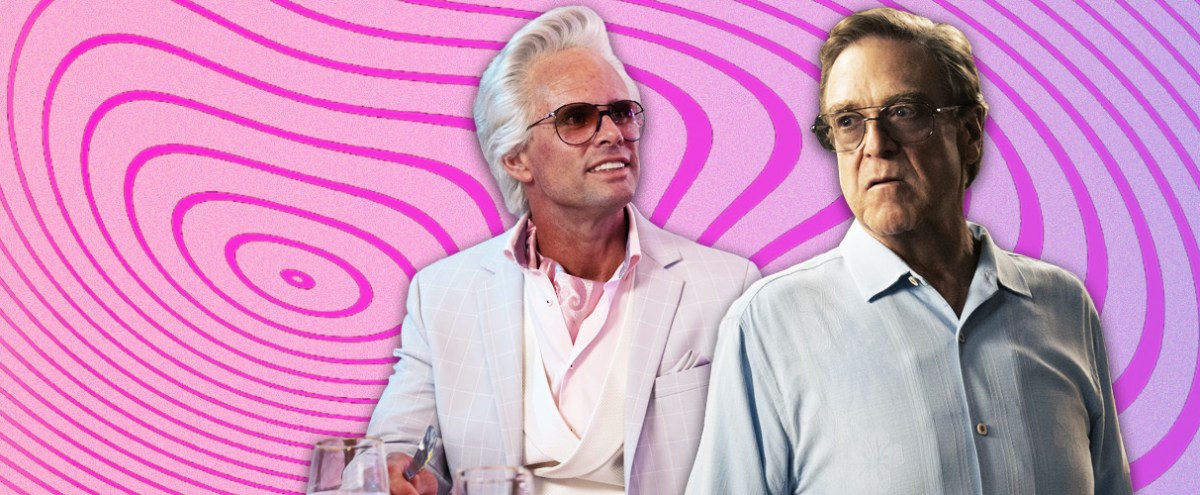
Martin Sheen of 'The West Wing'
Credit: NBC
Has history been a bit unkind to "The West Wing"?
We're talking about a show that won the decade's first four Emmys for Outstanding Drama Series and probably even deserved two or three of those wins.
Yet "The West Wing" has been missing from many of my favorite critics' Best of the Decade lists, or pushed down towards the bottom in favor of sexier, edgier, cable-ier alternatives. This list obviously isn't immune, as I had "The West Wing" in my Top 10 for a long time before talking myself out of it at the last second.
The greatest crime that "The West Wing" committed, to my mind, was starting off its run so tremendously and then becoming average (Dale Murphy isn't in baseball's Hall of Fame for the same reason). Because of that early excellence, the show's averageness felt like a horrible violation and people (both critics and audiences) turned on the show.
Looking back on "The West Wing," more than three-and-a-half years after its finale, it's easy to see enough greatness in those first three seasons, plus the underappreciated sixth season, for me to place the White House drama at No. 11 on my list of TV's Best of the Decade.
[More after the break...]
Created by Aaron Sorkin and airing its first 10 episodes in 1999, "The West Wing" was like an intermediate lesson in politics for School House Rock generation. Those Gen Xers knew how a bill becomes a law, but here was an introduction to all of the variably recognized staffers who push the agendas, broker the deals and keep government moving. They also attended state dinners, observed arcane Beltway traditions and fought with their own consciences and their own ideologies. And they did it with Aaron Sorkin's sparkling repartee, which would forever spoil us all for every future politician and government functionary. The people in Jed Bartlet's (Martin Sheen) inner circle were so smart and so funny and so idealistic that we dreamed our own public servants might be half as driven and half as clever.
"The West Wing" premiered at the end of the Clinton Administration, when the dreams of that White House had already been tempered by seven years of cut corners, dead-end compromises and door-slamming scandals. The show already dreamed of a better way of doing business in Washington. Then, in November of 2000, more than half of the voting population was left feeling that America's version of democracy had failed them. And again, "The West Wing" was there to provide almost a shadow government. When the terrorists attacked on 9/11/01, the Bartlett Administration had to temporarily transition into the real world, and while "Isaac and Ishmael" was preachy and didactic and rushed, this writer isn't going to criticize Sorkin for being one of the few small screen maestros to stare down the tragedy and attempt to provoke conversation.
Then "The West Wing" went back into its fictional world, which was where we liked it best and where it best served one side of the political spectrum. "The West Wing" was a liberal fantasy. Nobody would argue with that. And in the early going, especially in the pilot, Republicans were treated in a cartoonish manner. Sorkin got better and occasionally found ways to introduce right-leaning tokens to spur debate. Even if they were acknowledged as tokens within the show, Emily Procter's Ainsley Hayes and, in his couple appearances, Matthew Perry's Joe Quincy added to the level of the debate, which otherwise tended to be a dialogue between the left and the far left. Since the debate in the real world was mostly between the right and the far right, "The West Wing" was a voice that otherwise might have gone unheard (and still went unheeded). And "The West Wing" was popular enough in the beginning that it obviously wasn't only Lefties watching, which probably means that good writing and acting and directing aren't merely entertaining to supporters of a single party.
For at least two seasons, "The West Wing" was a remarkable place to spend an hour each week. The show's run in The Aughts began with "Lord John Marbury," introducing Roger Rees as one of the show's many wonderful recurring characters, and went on to include such classics as "Take Out the Trash Day," "Let Bartlet Be Bartlet" and the relatively shocking first season finale. The second season, while occasionally bogged down in hole Sorkin dug himself with Bartlet M.S., hit an amazing peak toward the end with "The Stackhouse Filibuster" and the devastating double of "18th and Potomac" and "Two Cathedrals," which was one of several times Sorkin sent viewers scurrying online to learn Latin.
"The West Wing" assembled one of TV's all-time best ensemble casts. Sheen and Rob Lowe were positioned as the early standouts, but there proved not to be any weak links in the assortment of familiar faces (Allison Janney, John Spencer, Bradley Whitford and Richard Schiff) and relatively newcomers (Dule Hill, Janel Moloney and Elisabeth Moss). And it was a true ensemble. Not only did Sorkin rarely lose track of characters, but he instituted a seeming tradition wherein he wrote an annual Emmy episode for each male member of the supporting cast, leading to wins for Schiff in 2000, Whitford in 2001 and Spencer in 2002.
When attempting to praise their shows, TV actors have a favorite cliche that makes TV critics cringe: It's like making a movie every week. But with the core cast and a new-ending rotation of recognizable guest stars, all put through the paces by Thomas Schlamme and the directors who emulated his walk-and-talk style and the handsome lensing of Thomas Del Ruth, "The West Wing" came close to that movie-every-week promise.
Then, in the spring of 2003, The Bad Thing happened. Sorkin exited the show and left it in the hands of executive producer John Wells. "The West Wing" went away in May of 2003 and when it returned in September, nobody talked the way they did before. Bartlet didn't sound as erudite. Josh and Donna didn't flirt with the same wit. Leo's bluster was more indignant and less righteously indignant. Journalists weren't about to let viewers forget that something was different, but it wasn't like the change could have gone unnoticed.
In their haste to justifiably tear into the depressingly anonymous fifth season, the first year of the John Wells administration, people are oddly generous to Sorkin's fourth season. Not only did Sorkin dig the show deeply into a another hole with the Zoey Gets Kidnapped and John Goodman Becomes President arc (Goodman's path to the monarchy in "King Ralph" was smoother), but he blundered what ought to have been the key arc of the entire series in Bartlet's reelection. Rather than staging some sort of meaningful fictional political referendum, Sorkin punted the reelection by having Bartlet face off against a brain-dead Republican (played by James Brolin) who failed to instigate any debate and was only there to provide our president with a few big "Aw, snap!" moments. "The West Wing" was not crushed by the transition from Sorkin to Non-Sorkin. Team Non-Sorkin was just left in the difficult position of digging out. That they did so without any real inspiration wasn't surprising. That they did so at all was impressive.
Creative salvation arrived in Season Six, specifically in the episode "Liftoff," with the first appearance of Jimmy Smits' Matt Santos. Allegedly based on Barack Obama (but who cares whether or not that's true), Santos was the catalyst behind a season long look at the primary process. Santos was joined by Alan Alda's Republican Senator Arnold Vinick in "In the Room" and the two men spent the rest of the season showing the journey and compromises that a candidate has to take to even earn a party nomination. The remainder of the season was as serious and interesting and in-depth a look at American politics as "The West Wing" ever took. It almost makes me sad to think of how great the season could have been with somebody else setting the structure and Sorkin coming in to contribute the dialogue.
Paired against each other in the Season Seven election, Santos and Vinick were a bit less engaging, but they still allowed for "The West Wing" to achieve a finale, with Bartlet leaving the White House and a new president arriving for duty. What Wells and company did in those last two years was bring a dose of realism to Sorkin's fairy tale Washington.
When "The West Wing" was at its heights, the networks made several attempts to capitalize on what was perceived as a newfound fascination with civics. Thought shows like "Citizen Baines" and "Mister Sterling" and "The Court" and "First Monday" and "Commander in Chief" took bits of the show's formula (and, in some cases, pieces of its creative team), what Sorkin and Schlamme brought to the table from the beginning wasn't reproducible.
Unfortunately, in the show's absence, nothing has appeared to fill the void in the political discourse. So we'll just throw in our DVDs from those early seasons and they'll give a reminder of why "The West Wing" is No. 11 on my list of TV's Best of the Decade.
Coming up tomorrow? Carl Weathers jokes, "Star Wars" references and family embarrassment.
div>A full explanation of the parameters for this list.
Comments
Option 1
Comment instantly as a guest GuestOption 2
Option 3
Login or create a HitFix account Login SignupChris M.
December 21, 2009 at 5:11PM EST Reply to CommentThe West Wing has become MASSIVELY underrated recently. It would TOP my list of the best shows of the decade, frankly. The first four seasons are almost perfect.
Erin
December 21, 2009 at 5:24PM EST Reply to CommentI'm now sad that I never watched The West Wing. Bring on Arrested Development!
tigger500
December 21, 2009 at 5:37PM EST Reply to CommentNever watched while it was on, but caught up on DVD whilst the election was goin on last year. It's amazing how similar Santos v. Vinick and Obama v. McCain are. Startlingly so.
That said, I didn't love the show, but I loved individual episodes and I loved loved LOVED Toby.
This would probably be 20 or 21 for me. It's definitely not better than Buffy or Veronica Mars (methinks you need to rewatch Vmars Season 2, by the by, lol).
KT
December 21, 2009 at 5:46PM EST Reply to CommentIt would absolutely top my list too! One of the best shows ever, I think. I can't think of another show that has great drama, hilarious comedic moments and is really intriguing and makes you think and learn too. It had all of that AND managed to blend all the aspects seamlessly within an episode. I don't think it'll ever be topped for me and I'm not even a democrat.
KT I forgot to mention how amazing the performances of the cast were almost all the time. I adore Josh, love Donna, wish I knew CJ and totally wish Pres. Bartlett was my dad or grandpa or something. The other characters were very well done too. I can't imagine a better ensemble cast.
December 21, 2009 at 5:50PM ESTWhatTheFDidIDo KT said
December 21, 2009 at 11:24PM EST"I can't think of another show that has great drama, hilarious comedic moments and is really intriguing and makes you think and learn too"
I can. It's the number one show on Daniel's list. :)
dan I can neither confirm or deny that my No. 1 show "has great drama, hilarious comedic moments and is really intriguing and makes you think and learn too." But it just might! :-)
December 21, 2009 at 11:39PM ESTWhatTheFDidIDo
December 21, 2009 at 11:21PM EST Reply to CommentHaving never watched the series during its original run, I recently started on DVD and quickly burned through the first 4 seasons. It immediately became my third favorite network show of all time(behind Homicide:LOTS and Lost).
I started watching the 5th season due to the massive cliff hanger of the 4th, but kind of wish I hadn't. I hate seeing great shows turn into simply mediocre ones(sadly the same thing happened to Homicide). I guess I'll slug my way through the 5th since you say the 6th gets better.
The first two seasons though, wow, simply stunning. I've rewatched "Two Cathedrals" a few times now and its amazing every time.
Diane
December 21, 2009 at 11:25PM EST Reply to CommentEverything I know about politics I learned from watching the West Wing. Many events that happem in real life were portrayed there. I still look for CJ when I see a televised oress conference. It would have been in my top #5 - maybe even #1.
BugKiller
December 21, 2009 at 11:32PM EST Reply to CommentGood show. Can't complain where it is.
Even though BSG is heads and tails better, and Laura Roslin would eat Jed Bartlett for lunch.
But the reason why Dale Murphy isn't in the HOF is two-fold.
One, his honest 398 homers and 2 MVP awards look small in comparison to the 'roid heads of the last 20 years.
In ANY other baseball era, from the 1890s to the 1970s, Murph's numbers would have been more than enough to make it into the HOF.
Two, there is a serious northern and California bias in the sports media. It's like that in college football, where crap Big-10 teams, who never win their bowls, like the Slowhio State Suckeyes can finish out of the top-10 or be embarrassed in their bowl game, yet somehow, they ALWAYS wind up in the preseason top-5, no matter how horrible their league is and how meaningless winning the Big-10 is.
The South is just "fly-over" country to most sports journalists outside of those who cover the teams in The South.
It's kind of like how Democrats see The South. Hey...
dan BugKiller- There were earlier versions where Don Mattingly and Fred Lynn were were my baseball examples. They weren't exactly right and I don't know that Murph really is either. I wanted somebody who started strong, dropped off the radar and had a huge comeback for one or two seasons, but still got overlooked. I see Murphy's HoF case, but I've got bigger fish to fry with the voters until Blyleven gets in. - Daniel
December 21, 2009 at 11:42PM ESTBugKiller More proof of the Cali-Northern Bias in sports media:
December 21, 2009 at 11:44PM ESTWhy isn't Jeff Schultz or Mark Bradley of the AJC on Around the Horn?
Atlanta is a bigger city and the AJC a bigger paper than say, the Denver Post.
Atlanta continually hosts some of the biggest sporting events in sports, like Final Fours, the highest-paying bowl game outside of the BCS, two Super Bowls, is home to the SEC Championship Game (known as the defacto National Championship Game).
Atlanta is the largest city in a whole region that is ground zero for the best college football, and the majority of the best NASCAR races.
Atlanta has more of right to be on a show like ATH than Denver or DC does.
Oh... and the REAL Home Run King hit number 715 while wearing a Braves uniform.
WhatTheFDidIDo
December 21, 2009 at 11:40PM EST Reply to CommentHmmmmm. AD at number 10? Im struggling to come up with the last 9 shows.
Definitely In:
The Sopranos
Deadwood
Mad Men
Freaks and Geeks
The Wire
Maybe In:
Friday Night Lights
Lost
Should Be In:
The Shield (I kid I kid)
Fernando
December 22, 2009 at 12:12PM EST Reply to CommentOne of the easier guessing today: arrested development. Dan, u got a stew going!!! (between this and the office clue, i think u got a thing for soup humor lol)
West Wing is another show thats been on the dockett for a long time but just seems too daunting whenever i want to pick it up.
lindahuang
December 28, 2009 at 11:56PM EST Reply to CommentYou have an eye for something.....something