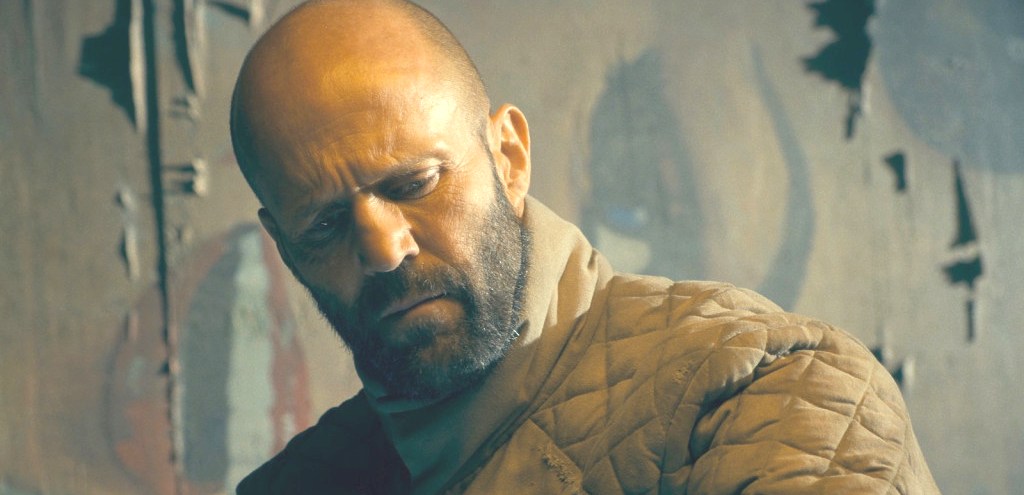
HBO's Jack Kevorkian telepic is dominated by Al Pacino's larger-than-life performance
Al Pacino plays Jack Kevorkian in 'You Don't Know Jack'
Credit: HBO
You think you know Jack Kevorkian.
Dr. Death. The dark, deeply set eyes and distinct facial features and physical posture.
You maybe know, in broad strokes, about his court cases, about his time in prison. You probably have a sense of his stubbornness, of his defiance.
If you have any advanced knowledge, perhaps you've seen his paintings, his creepy, evocative art.
Yup. You think you know Jack Kevorkian, or at least as much as you care to know about him.
Along comes
HBO's new Jack Kevorkian telefilm with a title, "
You Don't Know Jack," which makes a bold statement in implying a fresh perspective on the Father of Physician Assisted Suicide.
Does "You Don't Know Jack" deliver on its promise? The answer is a qualified, "Yes."
Anchored by a loony-yet-committed performance by
Al Pacino, "You Don't Know Jack" delivers a nuanced and pragmatic portrait of Kevorkian, simultaneously deifying his ideology, while acknowledging his all-too-human foibles.
If "You Don't Know Jack" succeeds as a character study, though, it often stumbles as a piece of drama, suffering from bland supporting characters and poor narrative focus.
Full review of "You Don't Know Jack" after the break...
"You Don't Know Jack" picks up in 1989 as Kevorkian (Pacino) performed his first assisted suicide. It follows his series of legal escapes, assisted by grandstanding attorney Geoffrey Fieger (Danny Huston), and his refusal to sacrifice his ethical principles to the established law of the land. For a while, there's a patient-by-patient clumsiness to the storytelling and the end, leading to Kevorkian's well-know incarceration, becomes rushed and under-explored. With biopics, focus is essential. I think that probably writer Adam Mazer chose the right place within Kevorkian's life to focus, but the focus within the focus isn't exactly right. There's a "cover all the bases" choice that comes at the expense of depth.
Mazer and director Barry Levinson present the story in a way that leaves little doubt that when it comes to Kevorkian's beliefs that people should be able to choose a dignified and merciful death. The film's strongest moments are reenactments and actual documentary footage of Kevorkian's taped interviews with potential patients. In those scenes, Kevorkian comes across more as a concerned Angel of Mercy than a Doctor of Death. Levinson handles that footage, especially the manipulated scenes in which Pacino had to be Gumped into existing video, with a tremendous amount of restraint. He lets the interviews play out, even at the expense of dramatic momentum. Even if the movie begins to feel sluggish at times, I prefer that fault to any approach that would have made those interviews feel even slightly exploitative.
Kevorkian's feelings are repeatedly articulated and expanded upon, taking his arguments well beyond the soundbytes familiar from interviews of the time. Mazer and Levinson stack the deck by barely dedicating any reasonable consideration to the opposition side, turning Kevorkian's legal and moral adversaries into one-dimensional background players, little more than glorified extras.
The good doctor's greatest adversary was himself. Mazer and Levinson take pains to emphasize his grandstanding and his stubborness, leaving little doubt that had Kevorkian taken a less confrontational path, he could have continued to go about his business with minimal intervention and maybe, eventually, advocated for changes in the law.
It shouldn't be a surprise that Pacino, only occasionally accused of being one of our more subtle actors, aces Kevorkian's grandstanding. Pacino finds many of Kevorkian's quirks and tics. He finds the antisocial rascal in Kevorkian and it's that side of the made that justifies the "You Don't Know Jack" title. HBO owns the telefilm Emmy category and given Pacino's stature, it's almost inconceivable that he won't be winning an Emmy for what can most kindly be described as a broad performance. Everything we know about Jack, from his voice to his physical mannerisms, is exaggerated here. You can go back and find
TV interviews with Kevorkian from this period and you'll hear that Pacino has taken the man's Michigan accent and magnified it by a factor of 10. That choice will draw some accusations of hamminess and some laughter, but when it comes to accent work, all I require is making a full commitment. Nobody will leave "You Don't Know Jack" doubting Pacino's commitment to the role.
Also, Pacino gets a bit of a break on charges of over-acting because he probably knew how thin his supporting cast was. Emmy winner Brenda Vaccaro and Oscar winner Susan Sarandon have half-parts at best. It's especially hard to guess why, other than political reasons, Sarandon would have felt this was a part that rewarded her in any way. Sarandon is still likely to get an Emmy nod for the movie, but that's on reputation more than contributions. Among the male co-stars, Huston is upstaged by a hilarious wig and John Goodman holds his own, but never feels completely integrated into either the story or Kevorkian's life. One could almost make an argument that writing "You Don't Know Jack" as practically a one-man show would have been better than wasting so much talent on so many underwritten roles.
"You Don't Know Jack" gets a lot of mileage from a John Proctor monologue from Arthur Miller's "The Crucible." In the monologue, recited by Kevorkian and later repeated in pieces, John Proctor declares, "How may I live without my name? I have given you my soul; leave me my name!" HBO's new biopic is a reclamation of sorts for Jack Kevorkian's name and even if it isn't a total triumph for all of this two-plus hours, it definitely will change the public image of Dr. Death, thus achieving its main goal.
"You Don't Know Jack" premieres on Saturday, April 24 at 9 p.m. on HBO.
A long-time member of the TCA Board and a longer-time blogger of "American Idol," Dan Fienberg writes about TV, except for when he writes about movies or sometimes writes about the Red Sox. But never music. He would sound stupid talking about music.
Comments
Option 1
Comment instantly as a guest GuestOption 2
Option 3
Login or create a HitFix account Login SignupMack
April 24, 2010 at 6:56AM EST Reply to CommentI think it's rather presumptuous of the reviewer here to reason that Sarandon choose to participate in this film for political reasons. Just because a person is politically outspoken does not mean every decision they make is driven by politics. She's never worked with Pacino or director Barry Levinson, Oscar winners like herself. That could very well have been a major factor in her wanting to do the film, it could be the sole factor. If Sarandon were a staunch conservative instead of a staunch liberal, I'd bet good money that this writer and others wouldn't feel the overwhelming need to slap her choices as politically-driven or influenced. What's next? Will every career decision conservative actress Patricia Heaton makes be labeled as politically-driven, too? Call one side out, call all sides out.
Trekscribbler FYI: Patricia Heaton isn't in the telefilm, Mack.
April 24, 2010 at 8:42AM ESTdan Mack - You're right. There are several reasons why Susan Sarandon would do this film, including the chance to work with Pacino and Levinson. One reason she *wouldn't* choose to do this film is the depth and detail of the character she's been given here, which is my only point. Then again, the movie *is* political and the politics of the movie *do* align with Sarandon's politics (politics that I agree with, so please don't make it sound like I'm painting a scarlet letter on her). So suggesting that might have *helped* her decision in this case isn't absurd. I would never say she did "Speed Racer" or "Enchanted" or "The Lovely Bones" for political reasons. But yes, if Patricia Heaton did a telefilm with a conservative POV somebody (maybe me or maybe other people) would mention that its politics aligned with hers.
April 24, 2010 at 11:46AM EST-Daniel
April 24, 2010 at 10:39PM EST Reply to Comment"HBO owes the telefilm Emmy category"
"from his voice to his physical mannerisms, is exaggerated her."
Please edit your work or hire someone who can.
dan Robby - Things often just slip past my eyes, especially when I've spent a long time stuck in the review. But I'm always happy to correct those things, so thanks for pointing them out! Fixed now... - Daniel
April 24, 2010 at 11:21PM ESTJake Lerner
April 26, 2010 at 3:58PM EST Reply to CommentI saw this movie on saturday night and wow was I impressed!Pacino knocked this out of the ballpark! Adam Mazer wrote an absolutely brilliant screenplay. It doesnt get much better than this!
Rob McDaniels
April 26, 2010 at 4:03PM EST Reply to CommentWhat an emotionally charged film! Great performances by Susan Sarandon, Danny Huston, Brenda Vaccaro and ofcourse Al Pacino. This is Emmy worthy. Barry Levinson and Adam Mazer really got this one right.
Mack
April 27, 2010 at 3:51PM EST Reply to CommentDan:
Thanks for your response.
As for the depth and detail of Sarandon's character in the HBO telefilm, revisit some of her most recent work? The majority of roles she's been tackling are smaller than they have been in years past. Even though she's thought of as a leading lady, she herself has said on any number of occasions thst she has always thought of herself as a character actress, so she isn't afflicted by that mutant strain of inflated ego a lot of her contemporaries are who think that if it's not a lead or a juicy, Oscar-baiting supporting role then it's not worth doing. And I think that her work in "Jack" does merit serious Emmy attention, she elevated the material as did Danny Huston, Brenda Vaccaro, and Pacino, of course.
And when you think about it, every film is political to some degree even comedies and action films, be they mindless or whiplash smart. For example, Eddie Murphy's "Nutty Professor" remake asks the audience to root for a morbidly obese man over his in-shape alter ego. "Independence Day" and "Transformers" are both pro-military and war. "You Don't Know Jack" is decidedly pro-right-to-die like its real-life title character.
I concede that the film's politics regarding euthanasia may have influenced her decision to participate, but considering so many call her out over politics, I felt that, for once, she deserved a break and that by pointing out that she could have made this film with personal politics playing little or no part whatsoever should be given equal consideration.
Trekscribbler Sarandon is best 'seen,' not 'heard.'
April 27, 2010 at 11:03PM EST