Why it should be 'Moneyball'
No Best Picture nominee addresses the zeitgeist in more human terms
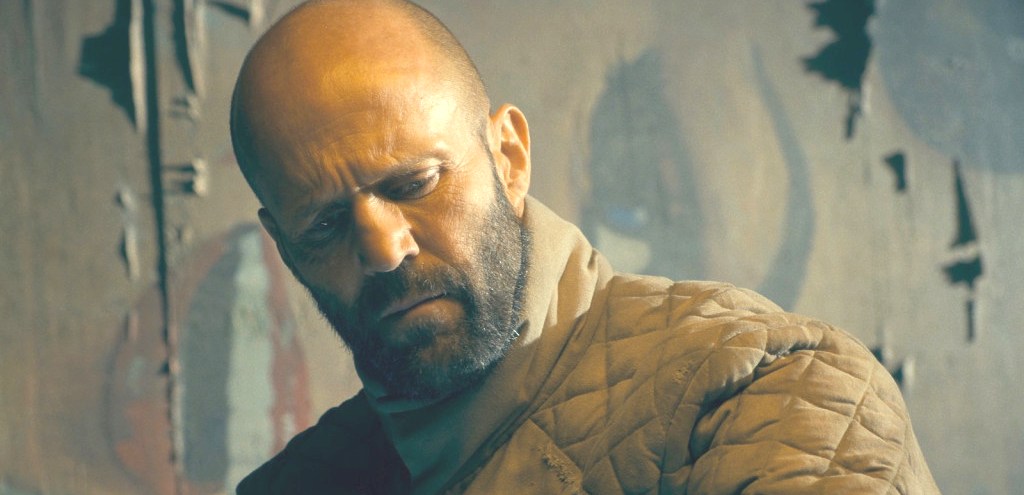
Brad Pitt in "Moneyball"
Are you a fan of In Contention?
Sign up to get the latest updates instantly.
“We’re all told at some point in time that we can no longer play the children’s game," a baseball scout says to a young Billy Beane in a flashback sequence in "Moneyball," one of this year's nine Best Picture nominees. "We just don’t know when that’s going to be. Some of us are told at 18, some of us are told at 40. But we’re all told.”
A “sports movie” is designed to follow a now familiar trajectory. There is an underdog (be it a group or an individual), an obstacle, a struggle, a conflict, a sequence where we believe that our hero will be forced to retreat and finally a life-affirming moment of triumph.
What is so fascinating about “Moneyball” is that it simultaneously follows and shatters those standards. It fundamentally disagrees with the overarching messages of the majority of sports films (just as its central character fundamentally challenged the way the financial team-building game of baseball was played). Many traditional sports movies either overtly or inherently deliver the message that our worth can be discovered, confirmed or solidified in one moment of victory and/or within the framework of a shiny, easily identifiable skill -- even if that skill is simply strength of will.
“Moneyball” presents an image of the human experience that feels far more reflective of life, one in which we are, as Brad Pitt said in an interview with The Guardian, “a series of successes and failures,” who must make choices based on multiple and nuanced factors.
The other message of many sports films is that our worth ought to be reflected by outside markers to the degree that a loss of the prize in question would be an insurmountable tragedy. “Moneyball” reminds us of the times that we hit a home run and are so focused on the wrong thing that we don’t even know it.
Of course a major thematic core of the film is the idea that change, even when positive, healthy and necessary, is hard, dangerous and threatening to those who are currently benefiting from the status quo, or are simply too complacent to question it. In one of the film’s final sequences, Beane is told that “the first guy through the wall always gets a little bloodied.” Indeed, he must, because you cannot break apart a stagnant and flawed structure without doing a good deal of initial damage. That is true in government, business, cultural trends and embedded ideas.
Billy Beane, in a collaboration with a group of people (represented by Jonah Hill’s Peter Brand in the film), took an unfair system and restructured it using science and math, which is phenomenal in its own right. He also used the even more revolutionary idea that a team’s strength really can be found within the sum of its parts. Beane says “f-you” to the accepted way of viewing the game and its players by taking a motley crew of “misfit toys” whose worth had been missed, perhaps even by themselves for a time, and telling them to drop their egos in order to create something stronger than their individual limitations -- stronger, even, than many teams that focus their sights on the spectacle and showmanship of superstars.
Related
-
Why it should be 'Tree of Life'
For the first time in ages, a true landmark is in the running for Best Picture
-
The writing shines in dense and rewarding ‘Moneyball’
Bennett Miller’s film is a tightly constructed, thematically layered piece of...
-
Interview: 'Moneyball' director Bennett Miller
The filmmaker talks making the movie on his terms in the confines of the stud...
-
Could this be Brad Pitt’s year after all?
The actor is gearing up his campaign with daytime and late night rounds as an...
A secondary theme in the film is actually posed as two questions: How do we value others? And, perhaps more importantly, how do we value ourselves?
“We want you badly and we think that this amount of money expresses that desire,” Beane is told as a teenager. The film utilizes the flashback sequences of his history as a player as a narrative motivator for his character’s present-day choices, but also as a thematic illustrator. His experience of being recruited as a young man and then failing to live into the theoretical promise of his potential demonstrates the damage that the kind of thinking the scouts were using can do to an individual. The larger tale presents a snapshot of how the game of baseball itself was affected.
The themes that “Moneyball” presents are universally relatable. It’s a film about more than just baseball (though it gives us an impressively easy-to-follow overview of the sport in our modern world). When we are young, we tend to look at people in categorical terms. They are either good or bad, worthy or not, friend or foe. We look for our own sense of self in external accolades and markers of success. If they are there, our egos are appeased. If there are times that they are not, well, we often have trouble reconciling ourselves to our lives. If we have failed to live out the fantasy version of our adult lives that we created, or that was presented to us, we may struggle to reform our identity.
We separate the merits of our fellow human beings by a rigidly defined hierarchical structure that simplifies and limits our real experience of the world. Moneyball (the strategy) takes a sophisticated approach to solving a seemingly insurmountable problem, but it also reevaluates the idea of value. “Moneyball” (the film) asks us to revisit our notion of value with the eyes of an adult who is experienced, perhaps a little worn and conscious that we as a culture have been caught in a cult of personality that limits our perspective to a degree that diminishes the majority of people to our own detriment.
In terms of craft, “Moneyball” is a beautiful, human, emotionally rich rendering of an extremely complex concept. We as the audience do not need to understand the minutiae of the mathematical equations that guided Beane’s ballsy and revolutionary approach, but we are given a sense of the logic. And the filmmakers took a property that was referred to as “un-adaptable” by the large majority of the industry (Michael Lewis’s book about the use of statistics in baseball) and translated it into a film that not only makes sense of an intricate problem-solving technique, but does so in such a way that real day-to-day humanity is not only brought forth but lauded.
I’ve already shared some of my thoughts on Brad Pitt’s performance. But having just watched “Moneyball” again, I am struck by the power of its naturalism. There is no moment where Billy Beane is forced to be other than who he is, to rise beyond his previous resistance and give the locker room version of the Gettysburg address. It is real and hilarious and strangely moving to see him awkwardly attempt to inspire his band of misfits, when the fact is, effusive speechifying is something he is simply incapable of. It over-strains the reaches of his patience for bullshit. He speaks in simple terms. He does what he feels is right. There is no hyperbolic shift for Billy Beane. There is him trying and doing the best he can with his own native and developed strengths and weaknesses.
There is never a moment in “Moneyball” where I am in doubt as to who Beane is or what he is feeling. There is clarity to Pitt’s emotional vulnerability and the commitment he has made to this role that is rare and worthy of recognition. He is not attempting to chew the scenery in a way that would demean the creature he has created. He respects the needs of the story.
As I’ve said previously, Pitt’s merits as an actor are often overlooked, misunderstood and underestimated. As such, he is in so many ways the perfect producer and star for this film. It's a film that challenges us to consider how we evaluate our own lives, how we calculate our own losses and wins and how we expect our "stats" to translate to a definitive measure of who we are.
“Moneyball” feels like it is dismissed a bit because it's pleasurable and because it is hard to categorize. It's not quiet, it's not really raw, it's not overly indicated, mannered and large and it's not forcibly restrained. It just resonates as human in a stunning way. It reminds me of the best parts of the films from the 1970s. It makes room for us to take it in. It does not rely on flash and it paints a portrait of dimensional and grown-up beings.
It is technically as worthy a film as any that are nominated. It demonstrates gorgeous if, again, easily missed craftsmanship, but more than that, there is something profound in the idea of this culture, at this time, taking a moment to celebrate life as something where we find the extraordinary in the ordinary.
"Moneyball" asks us to step beyond limited perspective and the children's game of spectacle and showmanship in order to honor hidden and untapped potential and depth. What could be a more applicable (and timely) Best Picture winner than that?
For year-round entertainment news and commentary follow @JRothC on Twitter.
Sign up for Instant Alerts from In Contention!
Trending Now on HitFix Boards
| Topic | Started By | Latest Post | Replies |
|---|---|---|---|
| DarylRichardson |
3 months ago
|
1
|
|
| gregel |
7 months ago
|
9
|
|
| Discuss Oscars on HitFix Message Boards » | |||
2012-2013 OSCAR PREDICTIONS
Best Picture
Best Director
Best Actor
Best Actress
Best Supporting Actor
Best Supporting Actress
Best Adapted Screenplay
Best Original Screenplay
Best Cinematography
Best Costume Design
Best Film Editing
Best Makeup And Hairstyling
Best Original Score
Best Original Song
Best Production Design
Best Sound Editing
Best Sound Mixing
Best Visual Effects
Best Animated Feature Film
Best Documentary Feature
Best Foreign Language Film
Latest Posts
-
She'll join 'Walk the Line' co-star Joaquin Phoenix in the filmWednesday, May 15, 2013
-
It's not a world premiere, but Luhrmann's latest lends the Croisette some glitterWednesday, May 15, 2013
-
Continuing our cheat sheet for the Cannes CompetitionWednesday, May 15, 2013
-
Get ready for Gosling, Damon, Timberlake, Cotillard, Swinton and moreWednesday, May 15, 2013


Comments
Option 1
Comment instantly as a guest GuestOption 2
Option 3
Login or create a HitFix account Login SignupCharles Miller
February 18, 2012 at 2:00AM EST Reply to Commentyes.
Charles Miller
February 18, 2012 at 2:00AM EST Reply to CommentYes.
Kristopher Tapley No single gum double freshens your mouth like...
February 18, 2012 at 2:05AM ESTSilencio
February 18, 2012 at 2:12AM EST Reply to Commentif only that could actually happen.
RichardZ
February 18, 2012 at 8:13AM EST Reply to CommentSo Glad Ms. Cornet contributes to Team In Contention.
Roth Cornet Thank you sir!
February 18, 2012 at 3:35PM ESTJJ1
February 18, 2012 at 9:03AM EST Reply to CommentExcellent article. Moneyball is one of my faves of the year. I recently watched it for a third time, and each time, I like it even more. Pitt deserves the Oscar, as well. I loved Dujardin, but am still pullin' for Pitt.
Roth Cornet I agree, I've watched it several times now as well and the more I watch it, the more I both enjoy it and get out of it. Thanks!
February 18, 2012 at 3:37PM ESTSJG I've never been a Brad Pitt fan, but even I have to admit that the guy really ought to walk away with the Oscar for this one. Definitely the best of the nominees, and I say this in a year when Gary Oldman is actually nominated.
February 19, 2012 at 5:50PM ESTThat said, I won't really mind all that much when Dujardin takes this thing.
Harrison
February 18, 2012 at 9:49AM EST Reply to Comment100% agree
Shekwanda
February 18, 2012 at 10:14AM EST Reply to CommentY E S
kirenaj
February 18, 2012 at 10:37AM EST Reply to CommentFor me "Tree Of Life" is the best movie nominated by far, but I do not think it really represents the year or the period very well, which I think an Oscarwinner should do. The only nominated movie I feel does just that is "Moneyball", my second favorite among the nominees. "Moneyball" for best picture and Malick for best director would be my perfect outcome. It will not happen though.
Roth Cornet I go back and forth between Tree of Life and Moneyball. They both have so much to offer. It's like one is this on the ground way of embracing being human, flaws and all and the other is this far more heady way of understanding or exploring our place in the larger scheme of things. It's just great to have each of them represented and, hopefully, seen by more people.
February 18, 2012 at 4:10PM ESTAndrewM679
February 18, 2012 at 11:12AM EST Reply to CommentIs Guy doing one as well? These have been great.
someperson I'm sure Guy's article 'Why it should be The Artist' will be written before the ceremony, followed shortly by everyone giving Guy an unreasonable amount of shit for thinking it should be The Artist.
February 18, 2012 at 12:59PM ESTDylanS lol, that's exactly what's going to happen.
February 18, 2012 at 1:21PM ESTKristopher Tapley Someperson: You nailed it.
February 18, 2012 at 1:47PM ESTm1
February 18, 2012 at 12:00PM EST Reply to CommentAre we now using the word "zeitgeist" to describe the achievements of any random Best Picture nominee? I actually had to look up the word again to make sure I didn't have the wrong definition in mind. Moneyball is a wonderful movie, but I don't consider it "timely" like I would Jason Reitman's movies or something like Midnight in Paris.
As for its deserving of Best Picture, I would say no. I loved it, it was witty, touching, and just plain fascinating. But I find it kind of one sided because it doesn't tell us enough about Jonah Hill's character and for a movie about "changing the game," it didn't really say HOW it did; it just showed what happened as a result of the process. It's a good film, but it lacks the immense insight and characterization of Miller's previous, superior Capote.
My top two would be The Descendants and Midnight in Paris (haven't seen The Artist).
Kristopher Tapley How is Midnight in Paris timely?
February 18, 2012 at 1:50PM ESTYou have to look deeper into Moneyball to grasp its zeitgeist elements. In the past I have chafed a bit at it, but it's rather undeniable. We live in a time when value is misinterpreted. As a country, particularly.
Roth Cornet I would agree that Reitman really captured a moment with Up in the Air in terms of the recession. I've said that film should go into a time capsule, actually. Young Adult really reflects the sort of arrested development that seems to define three or four generations. But, as Kris said, Moneyball is reflecting something in a subtler manner. It's looking at how and why we value things, and the kind of damage that certain ingrained ways of thinking can do, to people and to organizations, and ultimately to the culture at large. I appreciate Capote as well, and I must say that the more I watch Moneyball, the more I get out of it.
February 18, 2012 at 4:21PM ESTm1 I consider Midnight in Paris timely in the way that it takes part of history and relates it to the present. It conveys the idea that what we always want, isn't necessarily what we really want. In a Hollywood full of divorce and politics applying somewhat to this idea, I consider it timely.
February 18, 2012 at 5:58PM ESTChris P.
February 18, 2012 at 12:43PM EST Reply to CommentHear, hear.
Daniel Teh
February 18, 2012 at 12:57PM EST Reply to CommentVery good article although I don't think Moneyball should win Best Picture but I agree with the writer's points on how great a film it is.
Roth Cornet Thank you! Which one would you like to see win?
February 18, 2012 at 4:11PM ESTJLPatt
February 18, 2012 at 2:43PM EST Reply to CommentIt would certainly be a worthy winner.
The Dude
February 18, 2012 at 10:53PM EST Reply to CommentHaving finished watching the film less than two hours ago (damn Brazilian schedule that releases Oscar nominees only after the nominees are announced) I'm very inclined to agree with you. Great film in every aspect, would be worthy of taking 5 of it's 6 nominations (Hill's nomination was a little too much, though).
Tom C
February 19, 2012 at 2:34PM EST Reply to CommentThank you so much for this post. Everyday I think that I'm the only person who thinks that "Moneyball" is as incredible as you described here. I would give anything to see it win Best Picture, but if it fails to at least pick up Adapted Screenplay, it will be a travesty. This movie is a gift to both cinema and its audience and deserves so much more than it's receiving.
filmkr27
February 19, 2012 at 8:58PM EST Reply to Commentseriously anything but the artist -- at least this movie had some substance but it's not an all together SPOILER ALERT -- happy ending.
filmkr27
February 19, 2012 at 8:59PM EST Reply to CommentI love jonah hill but I thought he walked through this movie with zero emotion and like a zombie.
BigBro
February 22, 2012 at 8:42PM EST Reply to CommentI found this article more engaging than the film. In addition, the analysis of turning the movie in on itself is a bit ironic considering the mentality of the film industry sems to mirror that of big time sports. This film wasn't made with a bunch of rag tag character actors but headlined by a cinematic superstar, and the token dose of humility with the casting of Jonah Hill, who, even then, is a known name. The seeming contradiction of the making of the film versus its message doesn't necessary detract from the film, however, I guess you're left asking yourself, if baseball can learn the lesson of finding quality in the cracks and crevices, why do film studios have such a hard time learning the same lesson?Write a comment...